Featuring Beverly Clarke MBE. Episode available here now. Transcript follows the image.

Alan: Hello, and welcome to how to teach computer science the weekly (ahem) podcast from me, Alan Harrison. Today, I’m sharing my chat with Beverly Clarke MBE, an award-winning woman in tech and education. And we will ask the fertile question. What is the impact of computing?
Beverly: Yeah, you know, there’s that saying you know, sort of turn a different corner we would never would have met sort of thing, you know, you just don’t know. Well,
Alan: George Michael
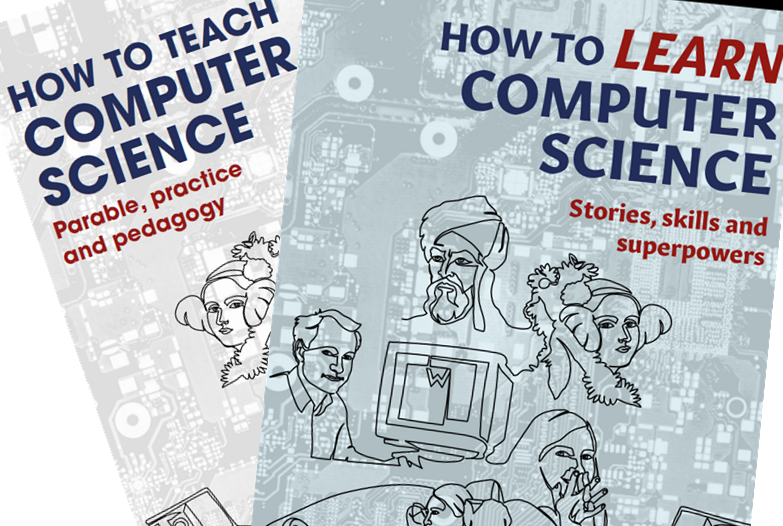
My name is Alan Harrison, and I wrote the books how to teach computer science and how to learn computer science available in online bookstores. Also if you like the podcast, you’ll love hearing me in person. Visit HTTCS dot online to find out more about my training and consultancy. And I can soon be speaking live at your school on inset day or at your event or conference. More details about this book, purchase links at HTTCS dot online. That’s the initials of how to teach computer science. HTTCS dot online. Listeners to the podcast, a special discount code to just type HTTCS pod. In the checkout page at JohnCattbookshop.com to get 20% off everything. That’s everything including classics such as teaching walk throughs by Tom Sherrington, the Huh series by Mary Myatt. And of course my two little books. You use the code HTTCSPOD at Johncattbookshop.com.
Talking of books. The publishing industry is struggling with how to deal with the influx of AI generated writing. Amazon revealed last year that Liam Lucas, a travel writer from Australia didn’t exist. And his many deeply flawed, 15 pound travel books were entirely AI generated. Including the author bio and the headshot. Amazon was alerted to the issue when someone noticed the cover of the Scotland guidebook featured a Bavarian castle. I promise you, my books are entirely written by me. And as far as I know, I am human. Although. I am trying out a new feature of Descript, this podcasting software, called AI voice.
Alan: So without further AI do.
Alan: Let’s meet my special guest, Beverly Clarke and ask the fertile question. What are the issues and impacts of computing?
So on the podcast today, I’ve got someone I’ve known for a long time and it’s always lovely to talk to this person. It’s Beverly Clarke. How are you, Beverly?
Beverly: I am very well, Alan. Thank you so much for inviting me. It’s just really good to catch up with you.

Alan: Great stuff. Yeah, it is. And so tell me what you’re up to at the moment I know you’ve done all sorts in the past, but I can’t keep up, so you’ll have to update me.
Beverly: Well, I like to describe myself as an award winning woman in tech, also one that has a portfolio career, which is all of those things that you said you can’t keep up with. Mainly, I’m an education consultant, which means that I work with others and I advise on a variety of different projects. It’s partly entrepreneurial because you’ve got to go out there and find your own work.
I write articles, thought pieces and share my thoughts and my life and my journey in tech. I also have a interest in writing children’s books because of wanting to address issues of young people understanding tech. So that’s when I created my children’s book series, The Digital Adventures of Ava and Chip during the pandemic.
That’s how I spent my time. I should also say my background is one. where I was in the classroom for 14 years. And then that evolved into working in wide computing education. And funnily enough, prior to being in the classroom, I worked in corporate IT. So I’ve worked with the Capgemini, the Ernst Young, those SO, those type of big companies.
And so I’ve always been in tech in a variety of different roles. And I think I bring something unique to this space that sort of tech insights and also education insights. And I bring those two together and I’m involved with other things. I, I’m a trustee for the digital poverty Alliance, which says what the name national charity.
And later on today, I’m going to also share a little surprise with you later on in the podcast.
Alan: Ah, okay. Brilliant. Yeah. So, issues and impacts of computing, then what does that mean to you?
Beverly: it’s a thing sort of grabbing my attention as we sort of journey through every single day. And, you know, we’re living in one of the most, I would say one of the most exciting times in history.
Alan: Yeah. They say. I think you’re absolutely right. Yeah.
Beverly: Yeah, it’s, I think it’s still called the fourth industrial revolution. So we were living in this really exciting time with lots of change, disruptive tech is just changing things. And I met a friend down the pub recently and we just said, what a time to be alive. Look at what’s happening, you know, because when we look back in history, we see all these industrial revolutions and these changes and all of that.
And we think, oh my gosh, what was going on? Wow, that was exciting. Well, guess what? It’s exciting right now. And of course, what’s driving a lot of that is artificial intelligence, maybe algorithms and what they send to me when I go on to social media or any of the news I look at, but it’s all, the use of AI and.
As you know, I also, I do a lot of podcasts and is it a force for good? Is this really something that’s good?
Alan: It’s a good question. And does it depend on what decisions we make right now and, and who’s going to make those decisions? And I always said to my kids in the classroom, you probably heard it on my podcast a few weeks ago.
I always used to say, particularly to the year nines, I would say the reason you need to do computer science GCSE is because we need more humans on the side of humanity when the robot apocalypse comes and then because it’s coming.
Beverly: I’m going to interrupt you. I’m going to disagree with you. I’m going to say robot apocalypse. This is the thing. Robots. It isn’t all robots. It’s how AI is being presented to us. And I do shy away from robots. I mean, robotics, you know, I love all that, but I do shy away from using the robot example because it isn’t sort of this sort of square thing, big eyes, sort of alien type image, you know what I mean?
But it’s it’s embedded everywhere. It’s, you know, the software. for example, that’s being used. Chatbots, they’re everywhere. Every single system seems to have chat GPT, under it these days. It’s frustrating.
Alan: It’s frustrating sometimes because, you know, you’d go on to your bank or your insurance company, or I was trying to find out what my pension pot had in it.
And this little bot pops up and goes, can I help you? It’s like clippy on steroids, isn’t it? And remember the paper clip back in the day. You’re trying to write a resignation letter, can I help you with that? And and nowadays it just, everything pops up. And you know that if you ask it questions, it’s almost certainly not going to be very helpful, because it only knows so much.
And then it goes, I’ll transfer you to a human. You are 17th in the queue. And and, And we know why these chatbots exist in commercial settings. It’s so they don’t have to employ so many people, but hopefully we’ll move away from that towards actually, AI adding value to our lives rather than just adding value to the bottom line of the uh, the shareholders report, you know.
Beverly: And this is the thing. So in the classroom, we’re preparing our young people for now and the future. We need them to talk about things that they have noticed, changes they have noticed around them in their local communities and nationally and when they’ve traveled and ask them what do they think the impacts are.
So we really need to start having these, you know, GCSE level is categorized as those moral and ethical conversations. What is the impact? Loss of jobs and, you know, for example, on Saturday, I went into my local Asda and I don’t know why I just happened to look up and there I was on camera with a little box around my face and.
It’s facial recognition. So are they really thinking about this when they nip to the shops? So there, I was a facial recognition. So I just took a photo of myself on it because guess what I can. And that leads to a whole lot of conversations. My image is captured. How is it being used? Who is using it? How do I feel about that?
So these are. The, you know, those long answer questions we have at GCSE level. So I would recommend to any educator to have these conversations with young people and ask them to provide examples that are impacting upon their, their lives. And I mean, that’s one example from my life. And then you just mentioned loss of jobs.
Well, as I then wandered around in the local Asda and I got to the till, well, I did self service, you know, it’s, it’s nice and it’s quick. However, we’re losing having that conversation with the person at the till. Maybe you don’t want to have that conversation occasionally, but there is a social element that’s missing.
Alan: Yeah, there is. Kurt Vonnegut, author of Slaughterhouse Five and many other, one of the biggest novelists of the 20th century, there’s a story he used to tell when he wanted to send a letter, he would go to the shops and buy a single envelope and a single stamp and put the stamp on it and post it.
And his wife got furious with him going, why don’t you just Buy a pack of envelopes and a pack of stamps. Then you don’t need to go to the shops. And he said, well, who would I talk to all day? You know, he said, I go to the shops, I have a conversation. Yeah. Yeah. This wasn’t this wasn’t an admission.
This is a story I’ve heard of somebody else, but yeah um, But yeah, so we do lose that human element, but then on the other hand, I’ve been guilty of arguing on Facebook as you do with people who say, Oh, I hate the self service tools. They’re taking jobs away from people. And I’ve argued in favor of them because some people I I don’t know if you know this, but I’m mildly autistic and mildly ADHD which I’ve discovered in my fifties, so a lot of people struggle with those interactions, and if you’ve got disabilities or mental health issues, then you might want a self service till, and the. Other thing if, if, if we’re talking about jobs and saving jobs and so on, we, we can’t resist capitalism.
Unfortunately, I, I’m old enough to remember when everything in the supermarkets had little priced stickers on them and somebody priced up everything in the supermarket with a little pricing gun. Oh, yes. Which was a. Yeah, well, that job’s gone. And many other jobs that people used to do because they had to before automation came along.
So barcodes got rid of that. And, you know, there’ll be more automation coming down the line. It only ever increases. And the reason. supermarkets and every other commercial company automates things is to reduce costs. If they don’t reduce costs, they won’t be viable. They won’t be profitable, and then they’ll go out of business and everyone loses their job.
So it’s a little bit odd to to complain about one particular job being taken away in this capitalist world where the ultimate goal of all enterprises is to drive down costs and drive up profits. So so yeah, automation is here to stay and it’s only ever going to increase, which means what jobs do we do?
I mean there will be more jobs in the tech sector for people who can navigate that sector who can program who can prompt engineer, which apparently is the new programming. So that’s why we do what we do. We’re computer science educators,
Beverly: and this is it. So you mentioned prompt engineering and jobs, and it’s quite a lot there for us to unpack.
So we’ve got the yeah, the
Alan: I do go on a bit.
Beverly: It’s all good, all good. We’ve got the Amazon fresh shops and the Tesco go shops and you know that that inspired my children’s book series, Smart City, and one of the issues in one of the parts of London is that people were boycotting one of these smart shops because they said there are no jobs for us.
So the more we automate, the question is, what do the people do? Now, that’s an impact upon a local community because we still got rising prices going on all the time. So. It’s to get our young people to understand. Okay, so we’ve now got this new style of shop here. What jobs exist within it? So you’re not using the pricing gun anymore and putting on the little sticky labels, but.
You know, there’s a route through the store to be followed there is this facial recognition, for example there’s data we’re going to capture, we’re going to have to still manage things such as theft, how we’re going to manage that, you know, what are the algorithms we’re going to use here? how much energy is being used up by all of this.
Maybe you’re going to work in green jobs. One of the government white papers says that almost every single job is going to have a green aspect to it. And that no doubt is also to do with the amount of energy that data centres are utilizing. So, you know, these are the conversations we need to have. So instead of fear, because you’re absolutely right, I’d say, in that.
Automation is here, it’s here to stay, and it’s just going to progress. You know, I, I also observed that the petrol stations are now, many, no longer have a human. You just sort of swipe and off you go. It’s great, it is actually quicker, but that’s the loss of jobs. And the thing is, these jobs don’t disappear overnight, it’s gradual.
And then there’s less jobs for young people.
Alan: Yeah, absolutely. And we’re going to need to tackle this. I mean, since the fifties, you know commentators have talked about, the day when we eliminate work, you know automation, robots, we’ll eventually eliminate all the drudgery and we’ll just sit around painting pictures and stuff.
But it begs the question, how do we earn a living? who pays us to sit around painting pictures? Well, I’m, a bit of a fan of the idea of universal basic income, because if we’re generating all this wealth for shareholders and it’s disappearing into offshore bank accounts and there’s no jobs left for ordinary people to earn money, then society will collapse.
So, you know, automation driven recession is, is a really likely thing unless we do something about it and maybe we need to start thinking about radical solutions like universal basic income. Everybody gets a small wage just because society can afford it with all of these vast profits that we’re making out of automation.
Beverly: I mean that would require a complete shift in the way we see things because the question is are we all happy to be equal? That is a very big question I’ll pose there. History has taught us and shown us that people are not happy to be equal, but maybe this is a new age and AI and automation as a force for good will achieve equality.
Who knows? I’m not sure I have the answer to that.
Alan: I mean, universal basic income or UBI would be a small living, Stipend if you like so that you know you can afford to eat but it wouldn’t be, the type of money that we’re used to from earning a wage, but it would make sure that nobody actually starves.
And that’s the idea, but I think it can exist, coexist with a capitalist system where people can better themselves by, education and, hard work and so on. So I think both can exist and small trials have happened, but we’ve, we’ve gone down a bit of a rabbit hole of UBI here. Um, And the only reason we have to think about, but we do have to think about these things, because as you said, Beverly, you know AI is changing everything. Jobs that we’ve been expecting would exist for a long time, manual jobs and semi skilled jobs and skilled jobs are all going to disappear. And it’s going to happen quite quickly. So we need to think about what we do about that.
Beverly: Yeah. And also the other thing that comes to mind for me is Who is actually implementing the AI? So it is these big companies and they’ve got the knowledge and the skills. And I do have a concern that there is going to be a gap between the people who understand AI and those who don’t.
And also the whole issue around bias in data sets that. We’ve just translated as a society the biases that already exist into many of these data sets, and we, you know, the news is full of issues that are occurring every day, whether that’s some sort of gender bias or bias against, you know, ethnic minority groups or any group, any underserved group there’s just There’s just we need to actually address this.
I do think that something could be occurring in the classroom when we’re having these rich conversations is actually asking who can this serve? So we need to be getting our young people to really think about who is the tech serving? Is it serving you? Do you know of a group, your grandparents for example, is it serving them?
Maybe the children have had experiences where they’ve used Translation apps, AI driven translation apps, and that’s a good thing, but you know, then we discuss the other side of it, so we need to understand there’s a lot going on here, and I do think we need to foster more debate in the classroom.
Alan: Yeah,
Beverly: you know that open conversations and no one is right or wrong. That’s a really important thing. You’re just presenting. Your thoughts, because we do need these conversations. You know, the prompt engineers, you know, the latest big job out there. There’s a bit of psychology in that. So while you’ve got computer science going on and tech, you’ve also got psychology.
How do you get someone to respond in a certain way? I mean, that could be a bit of manipulation in there. You know, is it good? How are we using this? So there’s Our subject and tech, it just goes across every single thing.
Alan: Well, this is it. I mean, I think it was the panel that we were on together in Oxford last December, and I mentioned the mentioned the team that Amazon put together to build Alexa included psychologists and linguists, as well as computer scientists, all working together, because, you know, natural language processing isn’t just a technology problem and so, What we’re wanting AI to do, like facial recognition and then taking that data and doing something with it, like allowing entry or not allowing entry and that type of thing or analyzing behaviors to determine threats in public spaces or threats towards public buildings.
So people walking around in a certain way all of that needs, psychologists and all sorts of skills from the medical profession and the social sciences as well as technology. And I think this melding of, of social sciences and natural sciences and computer science all together is, is what’s fascinating to me in all of the stuff that’s coming out and is going to be developed over the next, well, generation.
Beverly: Absolutely, you know, I’m just thinking about the classroom in ways which we can. support teachers and I’m going to offer a couple of tips here. STEM learning has some really excellent debate kits the teachers can download and get an idea of how to structure debates.
So it isn’t something you’ve just got to go and do on your own. There is support out there. There is they’ve got AI after school clubs with AI resources so this can be just fostered all the way through the school system. And one that I really like, TikTok, which, you know, it has its press, but they’ve released a stem feed and I finally got my TikTok stem feed appearing for me yesterday and literally there’s so much for stem out there and that’s where young people are learning. So, we need to be listening to them.
And I tell you what, another tip that I’ve got, which I like, just the news, I’m a fan of BBC news tech. I always go to that site. There is always a topical news article so you can use that, say, for your key stage four or five kids to actually have those conversations.
It’s much more text and they can do activities such as summarizing, pulling out the keywords, debating it. There’s lots of can be going on there, you know, techniques and that you can be using in the classroom and for your younger audiences. I’m a fan of things like BBC Click. You can really just get nice short snippets, which you could share with your class.
It could be part of flipped learning or you can get kids to go out and find and bring in their own. So we’re not just always giving to them. We’re having their lived experiences.
Alan: Exactly, the things that matter to them and then getting them discussing because I’ve done debate lessons before and they are really enjoyable to hear what the young people think about stuff, and to get them going and when you get that conversation going in the classroom, it’s fascinating sometimes to, to see the, light bulbs come on and where, they go, Oh, you mean, you mean the adults don’t have an answer to this question? You mean it’s still an open question that um, Yeah. that, my answer to it is as valid as anyone else’s. And that’s a very empowering thing to, help a young person to, feel that.
Beverly: Absolutely. We really just need to, this culture of openness that we need to develop and everyone to. be aware of their opinions and that they play a part. It isn’t just happening to them. And I do talk a lot in my wider work about questioning and encouraging young people to be questioning citizens. You know, we’ve got an election coming up here in the UK. Very, very soon.
Alan: I haven’t noticed.
Beverly: Okay. There’ll be no other news going on. One of the issues that’s coming up is can we trust what we see in the press?
Alan: Yeah.
Beverly: Yeah, and we do need to get our young people to question what they see. So, fake news. Really, how do you know that what you are seeing is real? What are you using to fact check it? And, could you be scammed? Could you be hoodwinked? how do you know what’s real? And I think it’s something we need to develop conversations around fake news a lot more.
Alan: I think we do. I remember I used to read a column in the Guardian called Bad Science by Ben Goldacre, Dr. Ben Goldacre and He was on Twitter back in the early days of Twitter.
And there was a lot of conversations about whether the government should have a rapid response unit to deal with fake news. And it would, it was just like, who decides what the truth is? It’s harder than you think to decide what is real and what’s fake. I mean, if, if if a government minister makes a claim about unemployment figures and he’s been misled by somebody else. Is that a lie or is that just a mistake? Was it malicious? We’re, who will decide that? And if it’s an opinion about politics or social matters, you know, who decides what’s true and what’s fake. It’s, it’s not something that you can easily put your finger on.
if we go back to Wikipedia, when it was first developed, the principle of Wikipedia is not truth or falsehood, but verifiability. Can you verify that that is true by looking at multiple other sources that back it up? And that’s, that’s the principle that Wikipedia applies to changes.
So. Can you verify that? Are other people saying the same thing? And who are saying those things? And what do they gain from you believing this thing? They’re the type of criteria that I use. What else can you do?
Beverly: Yeah, you know, a few years back when we had the Cambridge Analytica scandal, and if anyone hasn’t actually, you know, watched the documentaries around that, I’d encourage them to.
It. Really makes you understand how we can be manipulated and how algorithms can be used for manipulation and to destabilize governments and it’s quite shocking because I started, I may have told you this before, I realized through that Cambridge Analytica scandal, how what they were doing had been tested in other parts of the world previously You know, I think Trinidad and Tobago was one of the places that the destabilizing algorithms had been tested.
And so, I would actually be a fan of, if you are giving an opinion, that you’re, if it’s a social media post or article is, Things are tagged. Opinion. I mean, of course, we have to have that conversation. Who decides exactly what is fact?
Alan: Yeah.
Beverly: That is a very valid point. But I think we should have things tagged. Opinion. Just in the same way we’re starting to get images online tagged as AI generated so we actually know what’s going on. Because we saw it in the pandemic. there was lots of, conspiracy theories, and there was a lot going there was lots of people saying a lot of different things online, some misleading. And people were being encouraged to fact check Facebook meta was actually saying fact check, you know, this could be fake news. And there was a lot of that happening in the background. I think that was actually really good.
Alan: Yeah, I think, so we’re moving into the territory of freedom of speech and what role government should take in regulating speech. And I know, of course, in America, they have the First Amendment to the Constitution, which basically allows anybody to say anything and the government can’t intervene and we don’t have that, but there’s a lot of people that will argue, you should be able to say whatever you want in this country. And I just think that ultimate freedom of speech is a dangerous road to go down just allowing anybody to say anything because those with the reach such as the Cambridge Analytica’s of this world and the people backing Cambridge Analytica’s of this world can, can simply, take control of the narrative and just change public opinion as, you just described there.
So I think there needs to be curbs on not so much speech, but big tech, the reach that big technology gives people when they want to spread an opinion or a falsehood. The reach of big tech has changed everything.
Before the internet, you would interact with, I don’t know, a hundred people each day and now it can be a million and lies and untruths and dangerous falsehoods and propaganda can spread in minutes, literally around the world.
Something can go viral. And that’s not something that human society was ever built for. We’re not made to be able to cope with this, this level of contact with other humans. And so, like I say, misinformation can spread very, very quickly and, and cause real harm.
So I think there is a role for governments to play in regulating this, or at least putting the tools in our hands so that we can control what we see. To an extent, I don’t know exactly where we draw the line, but there needs to be more talk about it because big tech has got too much power.
As I wrote about in the book, it’s Google and Facebook meta deciding on matters of, really national or international importance without any interference from government. And, you know, there needs to be more role. of our elected officials who represent us in that space.
Beverly: Well, I do think there is there is scope for us to get involved. So there’s lots of public consultations, obviously. They don’t necessarily make it to our hands.
Alan: Yeah.
Beverly: Necessarily. So I’m going to disagree with you slightly that I do think their consultations do take place. And I don’t think that people realize enough that they need to participate in these consultations to actually have their say.
So I don’t think there’s maybe I’m misguided here, but I don’t think there’s so much of just things are happening. I think. There are consultations and we need to be active. This is what I mean. Questioning citizens, you know.
Alan: Oh, absolutely.
Beverly: Read the paper. Do you agree with what’s being said? So we need to be literate and digitally literate and aware. get involved. So I do think there is some transparency. I mean, I don’t think any company is going to tell you exactly how its algorithm works because then we’re back to what we spoke about earlier, the competitive advantage and things like that.
Alan: Yeah.
Beverly: Yeah, so
Alan: yeah, there’s there’s a lot of talk about TikTok at the moment, isn’t there? You mentioned it before and how America wants the Chinese company to divest TikTok in, in, in America, sell its American state. And I read somewhere there’s a lot of talk about it being a Chinese psyop or psychological operation on the American people. And I was reading about why that might be and what they’re trying to achieve.
The, the rumor is that they just created this thing to be the most addictive social media platform you could possibly make for teenagers and get them hooked on it. And that it. It’s no more than that. It’s just a means of reducing Western productivity to give China an edge in the economic world.
And it’s no worse than that.
Beverly: I’m going to interrupt you there. Have we fact checked this? How do we know this is correct and not propaganda?
Alan: Oh, I don’t know. It’s just an interesting idea. Yes, of course, it could be complete nonsense. But I can see if you were going to design something that would just sap children’s attention and just take them out of, school and work and stop them being productive, then you couldn’t do much worse than TikTok, really.
Beverly: Well, you see, this is the type of conversation and debate that needs to be had. I don’t know that to be factually correct. It could be propaganda. Who is feeding me this particular story? Who has decided this narrative for me? So I keep a completely open mind about it. What I would say Is the mental health issues that are arising in this digital age is something we do need to talk about.
And my jury is out on this one. Either we’re just talking more about things and it’s nothing particularly new or there are issues and I think there is data to support the fact that we do have more issues and more people feeling isolated, more people becoming addicted to whatever they’re scrolling on on their phones, there is a change in behavior.
I think our neural pathways are being rewired. Yeah. Due to the way in which we behave. So the mental health crisis is large and I do think that we need to be more aware of what we’re doing. I noticed so many people going for a walk or a run, which is a great de stressor. But what I noticed is they’ve got, you know, all the Fitbits, everything that they’re attached to.
Alan: Yeah.
Beverly: I mean, I wear my Fitbit of course, it’s tracking, but it’s not just People not using it just in that way. Yeah, you’ve got yours too. They are also, they’re looking at their phones. So, you know, yesterday I was in the gym and people sitting there on the machines with their phones scrolling. So you’ve been to the gym, but you haven’t actually done anything in the gym.
Whereas my phone is nowhere near to me. My Fitbit, which is a great device from the digital age, it’s recording and it’s doing all that stuff that I needed to do that I later on. I can look at my active minutes and all of that. So I do really think this is about use and what we do. I don’t know if you’ve noticed this.
It’s something really strange. Go for a walk around the local park and it’s noisier. And what I mean by that is people are just, they’re on their walks, but they’re having a chat, a FaceTime chat.
Alan: Ah yeah
Beverly: And it’s like, but you’re meant to be just having this time to think so, but you’re not, you’re still, you know, connected. So it’s about being, you know, being offline, disconnecting a bit.
Alan: Yeah, I know the value of that. so I, walk the dog and I I don’t get my phone out. And we do Tai Chi, my wife and I these days. I think it’s important that we help young people manage their mental health and understand the value of taking breaks from the phone and going out and, you know, touching grass, as we say um, it’s very, difficult to encourage that but I think we really need to try.
so my, two teenage kids, both used various apps like forest and study bunny to, manage their screen use. And so during revision time she’ll put. study bunny on and it’s this little animated rabbit that is studying with you and you can’t use your phone until you’ve finished the period of study that you said you were going to do.
And obviously all the devices now they have well being settings and you can put them on do not disturb. The number of kids that just don’t know that and their phone’s pinging all hours of the day and night. And I think it’s important that. We have these conversations in school.
I know there was an initiative a few years ago called No Scroll September, and I think these things are good just to empower them to feel they can put the phone away, turn it off, lock it, whatever. For periods, and I think this also speaks to phones in school. And this debate comes up on social media often, shouldn’t they have the phones out in school?
And there’s so many people, mostly not teachers who say, Oh, you’ve got to teach them how to use the phones. And, you know, don’t be Luddites. And I think the opposite is true. Six hours without your phone teaches them much more about themselves than trying to use it in the classroom ever would. I think it’s important that they learn that there’s value in living without it for six hours of the day and socializing and talking to each other.
Beverly: You know, so years ago when I was covering the South West, I went into a school in Cornwall and they put in place a, guidance. During break times there were no phones. And do you know what, changed the whole makeup of the sixth form common room in the school, because there was suddenly conversation. Otherwise, you would just have this total silence and, and it changed. And the students were so respectful of it.
Now teaching, computer science or computing or any subject, sometimes we will use devices in the classroom, but that is within a teaching environment. I am not a fan of every child having a phone and with all their notifications on and ping, ping, ping. That’s not conducive to an effective teaching environment. That’s not all school teaching. Because we need to be offline for that focus and that productivity.
Alan: Yeah, exactly.
Beverly: It’s really, that’s what it is. So school is a safe place. And children are there to learn and it’s social learning. It’s, you know, theoretical learning. There’s a whole lot of different learning that takes place And, you know, I haven’t actually shared this with you as yet, Alan, but I’ve recently set up a charity called Technology Books for Children.
That’s part of the focus to get young people to read. Thank you to read about technology and tech concepts. So it’s, it came out for me, you know I’m an author also, and I, I realized it was a wider space for this. So We really need to be questioning what’s going on and this whole thing about reading for pleasure around tech is really, really important because we’ve somehow got to change the narrative of what’s going on with tech and, you know, as educators and people with a keen interest and living in this very exciting time that we’re living in.
Alan: Yes.
Beverly: This is something we’re doing, you know, you’re educating through this podcast, we’re sharing our thoughts. We’re encouraging discussion, really.
Alan: Yeah, we are.
Beverly: Yeah. And that’s what I’ve done with, you know, around the whole thing of books, because books aren’t going away anytime soon.
Alan: No, no, I love books. I myself read about 30 books a year these days and I always used to put on the board of my classroom on a whiteboard on the door. I would say what I’m reading, so the kids could see and, um. I had books in my classroom and I think it’s important like you say, reading is something you can do anywhere, at any time, even without technology. I like my Kindle, but I do like paper books as well.
Beverly: Yeah, I mean, yeah, the whole reading for pleasure thing, it’s about getting children reading wherever But offline, there is space for lots of activity offline in the tech world. And I do, we champion tech, but there is this balance that needs to be had.
Alan: Yeah.
Beverly: I was going to ask you, you know, you mentioned about your late in life diagnoses. So the accessibility settings within many of our products, you know, the Google, Apple products, do you utilize them?
Alan: Yeah, definitely. So I’ve got the forest app on my phone, but there’s also I use do not disturb. And there’s a simple thing in the Android operating system. If you turn it on is flip to shush. I think it’s called. And you just, flip it and put it face down and that silences your phone. And that’s the dead easy one to use. You’ve got to remember that you’ve done it because then that won’t ring, you know. And then on my laptop, which I’m talking to you on now, obviously it’s Windows 11 and you can set that to do not disturb as well. And I use that a lot, but I like the forest app because you grow trees.
And we talked about this on your podcast when you interviewed me for the BCS. I just discovered the forest app and you grow, you grow trees when, when you’ve used it for long enough, they literally plant a real tree on your behalf. Cause some of the money that they make from selling the app obviously goes to sustainable forests.
So that’s really nice. But the forest app will lock you out of your phone. Of course, you can unlock it, at which point your tree dies, your virtual tree dies, and that’s not very nice, and you’ve then got a dead tree in your virtual forest. And so it’s, it’s just a little, it’s just a little encouragement.
And all these things are good. Little nudges, I think, are good. Little psychological nudges towards the right kind of behavior, whatever it is you’re trying to achieve. And in this case, it’s you know, I’m trying to work like, like I say, with ADHD, I’ve got to try and minimize distractions because there’s always about six or seven conversations going on in my head. And, and if there’s stuff going on around me and my phone’s pinging and stuff, I really struggle to concentrate. And so so just all these little tweaks do help.
Beverly: It’s really good to hear about, you know, lived experiences and, I do think we need to listen to people a lot more and because, you know, because we’re living in this exciting time with lots of change, it hasn’t been tested. So we need to understand
Alan: Yeah
Beverly: the impact.
Alan: Yeah, the modern world is designed to throw a fire hose of information towards you every day, isn’t it? And it’s, it’s bewildering and it’s bewildering to us who’ve been around a few decades. But imagine what it’s like for you, really young people and children.
You know, Oh my God, I’ve got this all this information. What do I do with it? You know.
Beverly: You know, it’s also nice because I, you know, and I want to speak to my own children and you know, nephews and so forth. they have different ways of approaching things, which is quite interesting. I remember when one of my daughters went to university and this, this could be the pros and cons of being connected. They use Snapchat and they were able to then keep in touch and see visually where they all were around the country. So you’re just up and going, Oh, well, you know. Mary’s gone off there, Sophia’s there, John’s here, and I found that really, really nice. I thought that was really nice, but do we need to stay that connected when, you know, I think you said 100 or how many of the people we’re naturally able to remember?
When you’ve got 3, 000 friends.
Alan: Friends. The one I, the one that I found really difficult was I heard about the, you might have heard about helicopter parents as in or is that the word, but they’re too intrusive on their children’s lives and they will have the location tracking turned on so they can see where their children are.
And that’s fine. But when they become young adults, it’s probably time to turn that off and trust them. But anyway, I heard this story about this teenager on a gap year. And, and his mom was watching where he was. And he was in California or somewhere and he got on the wrong bus.
So his mom phoned him and said, you’re going in the wrong direction from halfway across the world. So what psychological effect does that have on a teenager when your mom is watching what you’re doing when you’re halfway across the world on a gap year and getting you got on the wrong bus? And she knows and she calls you to make sure you’re OK and get you off the bus and onto the right bus.
I think. That’s very wrong to me. That child has, that young person has to make their mistakes and, and, and fix them themselves and learn how to live free of their parents. And the parent needs to let, needs to let go.
Beverly: I completely agree with you because Guess what? So they’ve gone the wrong way on the bus, but imagine if they discover something fantastically new.
Alan: Oh, yeah. Oh, yeah. I didn’t mean to get here, but wow, look at that, you know.
Beverly: Yeah, you know, there’s that saying you know, sort of turn a different corner we would never would have met sort of thing, you know, you just don’t know. Well,
Alan: George Michael could well have been the, the, the sage that was George Michael, but there was also Douglas Adams as well. There was, I think it was in his book, Dirk Gently’s Holistic Detective Agency. He said, I use Zen navigation. I never get where I was planning to go, but I always get where I’m meant to be.
Beverly: Sometimes we have things that are too rigid, you know, we’re literally following the algorithm. Well, you must go from here to there. No, turn it off. I actually want to go there. I just want to wander freely, see what I find. And I think that’s the way to live. Just be. Open to opportunity, open to finding out. He’s on a gap year. He’s on holiday. Why should he be told where to go?
So, but you know, it does, you mentioned parenting there. We come back to this. So I do think all of this education has got a few different elements. So you’ve got the parenting angle. So parents to understand tech and be involved with their children in the right way, not the helicopter way. Yeah, there’s obviously the education angle where we come in as educators. And then there’s also listening to young people and what they want.
From life, from now and for the future. And, you know, listening to them. So it’s, it’s a blend. It’s a generational blend to solve the problems that we have in the world and to make it a nicer place.
Alan: Absolutely. Well, you did say at the start of the podcast, it’s a fascinating time to be alive and I think you’re absolutely right. Let’s do what we can. involve young people in decisions about their future and empower them to make those decisions and be part of the conversation, I think is the most important thing we can do as educators.
Beverly: 100%. I agree with you.
Alan: Good stuff. Well, I think that’s probably a good time to wrap up . Well, that was great. I think We talked about all sorts of stuff there vaguely related to the issues and impacts and implications of technology and, and yeah, the message is really just have those conversations with young people, invite their opinions and, and get that debate going in your classroom . So how’s the Ava and Chip book sales going? Is that going well? And.
Beverly: Sales are a bit flat at the moment, but you go through these. Yeah,
Alan: yeah. And, and the new thing sounds fascinating.
Beverly: The books, yeah, go have a look at it. I am literally working on that. Ava and Chip, I’m actually bringing out an activity book later in the year. So that’s going on. But then alongside it, I thought, you know what, there’s a wider piece here that could be covered. So, you know, if you want to contribute to a blog article around tech books or anything or magazines around tech or anything like that, you know, just feel free to drop, drop me a message.
It’s just, we need this conversation. The thing is working the way we have done. There’s a lot of focus on the teachers and teaching and knowledge and the curriculum, but I do think there’s many different ways to solve.
Alan: Yeah,
Beverly: definitely. And when you start digging into where are the books that children can just sort of sit in their bedrooms and read about tech, you start thinking, hang on, where is, where is this?
So, and you know, someone else can come along and do it, but guess what? I have the knowledge, I’ve been in the classroom, I’ve been there, and you know, I’ve got some really great trustees around me, you know, like I’ve got Sue Atkins, the TV parenting expert, come on board as a trustee, so we’re getting these different people.
Alan: Great.
Beverly: It’s quite a lot of work.
Alan: Okay. No, sounds fascinating. So you’ll have to keep me posted on that. Yeah. Yeah. So lovely to talk to you as always, Beverly. Thanks for coming on. Good luck with the charity and the books and everything. And yeah, we’ll keep in touch. This’ll be a few weeks down the line yet. Cause I’ve, I’ve got a few recordings backed up that I haven’t got out yet. Fantastic.
Beverly: Just let me know when and I’ll be happy to share it out.
Alan: All right. Brilliant. So thanks for coming on.
Beverly: I’m going to cook the dinner during now then I’m going back on the phone.
Alan: Okay, take care then.
Beverly: Take care, nice to catch up.
Alan: Nice to catch up with you. Bye, bye for now.
Thank you. AI Alan that’s quite enough of that. Honestly. These AI as a getting everywhere. Well, I’m off to tick some crosswalks and fire hydrants to prove that I’m not a robot. And I’ll see you next time on how to teach computer science. Have a good week.
 How to Teach Computer Science
You must be logged in to post a comment.