Schools, colleges and universities are now overwhelmed with choice when it comes to AI tools. Some institutions have grasped the nettle and are powering ahead with AI, others are quite rightly nervous about adopting the new and daunting technology while managing the new risks it presents.
In response to these challenges, three educators have come together to navigate the information and produce a useable framework that will help leaders and educators bridge the gap between AI policy, strategy and implementation. The result is EQAITE, your one-stop-shop for evaluating AI tools, resources and affordances.
You can read more about my work on EQAITE at the dedicated project website, eqaite.org, or read the introductory blog post here.
Welcome to another podcast episode! The podcast is here
Transcript…
Hello, and welcome to how to teach computer science the podcast. This is episode five. How do we teach programming? I’ll be answering that question and many more with the help of today’s special guests.
, I do think it is really important for children to learn to program. I know we’re talking about it can build up resilience and it can be really creative and it helps you think outside the box.
ChatGPT and the other AI things, are all really great for writing bits of code, but I think, it’s a lot more valuable to be able to understand what the code’s doing, and then that way, if you have an error, then you’ll know why that is.
If you are grateful for my blog, please buy my books here or buy me a coffee at ko-fi.com/mraharrisoncs, thanks!
And we’ll hear the full interview shortly. My name is Alan Harrison, and I wrote the books how to teach computer science and how to learn computer science available in online bookstores, more detail at the companion website. HTTCS dot online. That’s the initials of how to teach computer science HTTCS dot online. So last week’s episode with Andy Colley proved to be an epic. Even with drastic cuts, it was still 43 minutes and this week proves to be just as difficult to edit. So there will be no more wasting time with silly jokes.
I’m just going to.
What?
oh, so it seems Alexa is listening and has a joke for me. Let’s see how this goes.
Who’s there?
A hardware interrupt.
Oh, dear.
All right, let’s try something else. Alexa. Why was six afraid of seven. Because 7, 8, 9. ​
If you like this content, please subscribe. Tell your friends, buy my books at HTTCS.Online. Leave a review on Amazon or at the very least buy me a coffee, details at HTTCS dot online on how you can do that. Every week, I’ll transcribe this recording and blog it at HTTCS dot online slash blog.
So if you don’t like my voice. …
We’re talking about programming today and soon I’ll introduce my guests, but remember in the books HTTCS and HTLCS each chapter starts with a story from the hinterland of our thrilling subject. Today’s story takes place in Boston, Massachusetts.
It’s April the 10th, 2019. Late afternoon. The final stage of the pipeline of algorithms is executing. Dr. Katie Bouman sits at her Mac. And watches open mouth as the picture starts to appear in the upper left window. She and a team of computer scientists, astrophysicists and electrical engineers have been working on this project for three years. Five petabytes of data on half a ton of hard drives from telescopes around the world, arrived here at MIT over a week ago, and the algorithms have been churning it ever since.
Advertisements
The black hole, Doctor Bouman is analyzing, looks tiny from earth. About as big as an orange word on the surface of the moon. Refraction limits what we can see with our telescopes. So the very best image of the moon from earth consists of 13,000 pixels. But each pixel at that distance would then contain around 1.5 million oranges. To take an image of a black hole we would need an earth sized telescope. We can’t make one of those, but we can connect telescopes around the world, giving us lots of low resolution images from different angles which could be processed by computers into a single image. That’s what Dr. Bauman did creating an earth sized computational telescope called the event horizon telescope. Just like several different, low res images of the same face can be used to generate an accurate prediction of the real face. We can use these sparse noisy images and put them together to create a more detailed image. Doctor Bouman has spent the last three years building a computational pipeline to do just that with the images from the radio telescopes around the globe being fed into the algorithm, which eventually produces an image. The full story can be heard on Dr Bouman’s Ted talk, but what excites me is that the programming language chosen for all this computation was Python.
So it was at around 6:45 PM. On April 10th, 2019. A researcher took a picture. Of Dr. Bouman at her computer in an image, you can see in my books and is reproduced on the cover. We can see a code window on the right of her screen, which looks like the matplotlib Python library.
We can see the now famous image of the M 87 black hole, but most importantly of all, we are privileged to witness the joy of discovery.
Dr. Bouman presses her hands to her mouth eyes wide open in wonder. An algorithm, her algorithm has unlocked one of the secrets of the universe.
So you can buy. How to teach computer science or how to learn computer science, to read that story again, and many more. I did put lots of hinterland of our wonderful subject into the book. So that you can share it with your students or enjoy it just for itself. As for my story. Well, I learned to program in the eighties home, computer boom. My school was one of the first to get the BBC micro . On which Mr. Charnley taught us to program. And of course the first thing we did was write a program that went a bit like this:
10 PRINT. ‘Mr. Charnley is an idiot’ 20 GOTO 10. And then press run.
Mr Charnley was not an idiot. he was a very good computing teacher I got an a in computer studies in 1984. And it’s all been downhill since then.
So that was my classroom experience. But today’s guests are going to tell me a little bit about theirs.
It’s time to introduce my special guests on the podcast today and I’m delighted to have Harry and Anna Wake with me, who are the young creators of Mission Encodable. So please do tell us a little bit about yourself. Harry first, perhaps, and then Anna. Harry.
Yeah my name is Harry. Of Mission Encodable and I’m Anna’s cousin. I think a lot of our interests are quite similar, a lot of what I’ll say will also apply to Anna, but I’m studying maths, computer science, physics, and further maths at A level currently.
And about two years ago I made Mission Encodable with Anna, which is a website that teaches students to code in a fun and engaging way.
Over to you, Anna.
So yeah, as Harry said, we have very similar interests, but I am the other co founder of Mission Encodable, and I’m doing exactly the same A levels as Harry.
But it’s also fair to say that outside of doing computer science and programming, we also like climbing and swimming and running and all those activities,
I think we do both like all of those, so it’s quite handy. Just means that whenever we have to write a bio out, it means that they both look almost identical, like they’ve been copied. It’s because we are just very similar people, I think.
yeah. Thank you for the books, by the way, they are really nice.
Yeah, very nice. Nice little little book, yeah. So I wrote the first one, which is sat over here, for teachers. There you go. That one, the teacher one, but this is full of stuff that teachers need to know, and you don’t need to know, not unless you’re going to teach it, which is something you could do in the future.
You think, ever think about going into teaching?
I have read quite a bit of pedagogy stuff recently, just because I find it interesting, and it is funny because the more you learn about it, the more you watch your teachers doing things. cold calling, found it.
Yeah, I often think about that when, I make this podcast and there’s lots of other teaching podcasts and YouTube channels and stuff out there and just books generally, and I think, do the kids know what we’re doing?
Would the students, if they knew what we were doing, would they try and undermine the pedagogy techniques? That would be mad. So you don’t undermine cold calling, do you like keep sticking your hand up and annoying the teacher who’s trying to do cold calling? No, I mean I’ve
never quite got to the extent of some pseudo reverse pedagogy, but yeah, it is really interesting and I’ve got teachers who do more of it than others do as well, it seems.
Yeah, that’ll be interesting, if I can talk to you sometime about, about the good teaching and the bad teaching that you’ve seen. in classroom, but we’re going to try and stick to computer science today.
So while we’re on the subject then so your experience of learning programming in school, I was, I must admit, I did my homework, I was watching that video you did with Craig and Dave from nearly two years ago now, I think, where you were introducing Mission Encodable, and you were saying that you were Coding for fun during lockdown.
Yeah, so during lockdown I think Harry and I, we started to have our Zoom meetings at the time. Yeah. We called them our executive meetings and we’d just make little projects. I think the first one we did was in Scratch. And very imaginatively, we called it Wake Mania. It had lots of games, all sorts. It was a bit like a board game and then you could play it with your family
so it was really nice. And then we made a website. And it had lots of puzzles and things like that. I had a Caesar cipher all kinds of, number pyramids, all that kind of thing. And that used just HTML, CSS, JavaScript.
But it was quite fun. And, we had a lot of fun designing it and making all the problems work. And then we entered that into the coolest project competition. And we did win, and we’re very pleased with ourselves.
Brilliant. Brilliant. Coolest projects. That’s run by the Raspberry Pi Foundation, I think, isn’t it? Did you have to go to a prize winning for that?
No, because it was in lockdown.
Of course it was. Did you have a, did you have a Zoom prize giving ceremony?
It was a YouTube prize giving, wasn’t it? Yeah. It was like a live stream and I think, we both watched at the same time waiting.
I’ve got kids roughly the same age as you. One who’s just gone off to university, and one who’s in year 11, and she went through secondary school when there were no trips anywhere.
So she didn’t do any school trips at all. From year seven to year 11, it’s pretty sad. So everything happened online.
You’re that generation that loads of stuff just went online during a really important part of your life. How was that for you anyway, ?
Yeah, it was strange, I think, but I think we also adapted to it rather well, or at least I seem to. There’s a lot of benefits that have come out of it. I don’t think Anna and I would be having these little meetings each week had lockdown not happened. There are positives that have come out.
Like this, the way that we just jump on a Teams call and everyone just does that now, Teams, Zoom or Google Meet, whatever, so the world’s changed and one of the problems we’ve got as teachers. Is we can’t work at home a lot of teachers are leaving the profession because they’re seeing their other halves working at home and going, I want a bit of that.
Advertisements
Yeah, quite, until all schools go online, that’s going to be a big problem.
Yeah, there is discussion about that now, isn’t there, whether virtual remote teaching could be a thing and if everyone could just stay at home all the time and more people signing up to programs that do that.
I don’t like the sound of it very much, so I’m quite glad I mostly avoided it. But,
yeah, do you know, I think there’s a place for that for certain students. There are a lot of students who, have trouble going to school for various reasons, disability and so on. And I think, so online schools really need to happen. But I don’t think it would be good for everybody. Not all students need to do that.
No, I agree. I think there’s a nice social aspect of actually going into a school and seeing your friends and seeing your teachers and things.
And I don’t think you get that online, but then equally, there’s a persistent attendance issue at the moment. So for some people that find it difficult to come in for all those reasons, I can imagine it also has lots of positives. So yeah, it’s an interesting one.
It is, yeah I read something recently come back to technology this is primary school children going to school and they’re unable to read a book. They’ve never seen books before and they swipe the cover of the books as if it’s an iPad or something.
That’s quite scary, isn’t it? I’ve heard of people getting to secondary school in their computing lessons, having never used like a proper monitor and keyboard before, and they start swiping at the screens apparently, but I’ve never heard of it with books.
Oh yeah so yeah kids unable to use a book when they start school is quite tragic. Okay, don’t get me wrong, I love my Kindle and that’s where I read everything, but that’s mostly because I’m 50 something now and my eyes have stopped working and so I can’t read the text on ordinary books these days. Kindles are great for that.
So I want to First of all, ask you about learning programming and what it was like for you learning programming in school. And before I go into that, I’ve just interviewed Andy Colley who’s on last week’s podcast by the time this comes out.
And he wrote the Python course for Repl. it. Yes, I know we all know about Repl. it and that’s a A big deal for you guys, I’ll talk about that in a minute, but so he knows a bit about teaching programming, Andy Colley, and he said
If you are grateful for my blog, please buy my books here or buy me a coffee at ko-fi.com/mraharrisoncs, thanks!
I’ve seen so many programming courses that go variable assignment, input, output, and now recursion. Yeah, absolutely. And there’s this giant pit that you fall into. You’re on your back like a turtle and you can’t get out. And I see that look on the faces of students all the time
. Those are the words of Andy Colley. Have you experienced that in the classroom? Have you found yourself suddenly lost by where the programming teaching has gone?
I think a lot of teachers. Yeah, teachers know not to do that, I think as a general rule. Not all, but the majority, I think, they’ve taught for long enough to know that, you do have to transfer your knowledge in a way that students can understand as well. But if that is happening, something’s going a bit wrong, I think.
Yeah, so what I’m driving at is you probably had decent programming teachers
Anna, what was your experience like?
It was all right. I think I was quite lucky because my dad is also quite into programming and he when I was, not super little, but probably. Year six or seven, we would make like Python games and all that kind of stuff. So he taught me a bit of Python before I got to school. I think for a lot of people it just becomes quite dull at school because the projects, they’re all very samey and they can get quite mathematical and that some students find that hard to relate to.
Yeah, I guess you guys are, like, not typical students, really, because you probably a bit like me, learned how to program before you went to school or before you went into secondary school, at least. And you said about mathematical problems and stuff, and I was watching that YouTube video you did with Craig and Dave nearly two years ago now and you were quite keen to put into your product mission encodable, which we will come to in a minute stuff that wasn’t mathematical. You did madlibs and a band name generator, I remember. Was it important for you to put in stuff like that rather than just oh, this is the volume of a cuboid
yeah, absolutely. I was going to say earlier, if you can create games and. actual projects with your programming, like right from the beginning, like with my dad, we did connect four and tic tac toe and that kind of thing. And it just, it shows you what you can do with the programming that you learn
and I feel like occasionally that’s missing from the projects that you do, like finding out the volume of a cube is all very well, but it’s not really showing you how important it is and all of this so yeah Harry, do you want to talk about mission encodable yeah, not being mathematical.
Oh I’m very happy to give you the elevator pitch. Thank you. So Mission Encodable is a website that Anna and I made about two or three years ago now, and that we are always working on it and we designed it because we wanted to make learning to code more interesting.
So I think, as Anna’s just touched upon, a lot of tutorials are just. Quite dull to be frank, like they will talk a lot about mathematics or other things which aren’t very relevant to students lives, and we were seeing a lot of our peers get quite switched off by that, I think, and we really liked coding, so we didn’t want to just watch that, so Mission Encodeable was what we made to try and inspire people a bit more and to find, the more enjoyable aspects of programming, because it is really creative.
So it’s a free course and it teaches Python. All the way up from students not knowing anything about coding, having never written any code, or knowing what an IDE is, or even what Python is, all the way to being able to answer some of the very top tier questions in their GCSE computer science exams. So it’s split up into several different levels.
I think we’ve got nine at the moment, although by the time this comes out, hopefully that will be incorrect, we’ll actually have 10. So there’s lots more to come. But the principle of it is that we want to make learning to code really fun and enjoyable for everybody. So there are lots of projects in there.
There’s step by step walkthrough explanations, so teachers, students, everything they need to know, and they get to see it applied in practice in a really fun and engaging way.
Yeah. That’s brilliant. I’ve had a play with it and yeah, I can see what you mean. You build up the skills and then there’s a project and it’s something interesting.
Like you say I mentioned the band name generator earlier and the Madlib it’s quite a good incentive to, to get all those skills because you can make something that’s fun.
Yeah, good. And like I say, I watched you talk about it on your YouTube video it must seem like ages ago now, with Craig and Dave and just as an aside, I know Craig and Dave very well and we’re fans of each other’s work, I think. So the book that I’ve just sent you a copy of how to learn computer science, haven’t I?
And if you turn to the foreword, you will see a foreword by Craig and Dave, because they were very supportive of my book projects and and Dave actually proofread the whole thing and gave me lots of pointers.
When I was working on the book, I had this brilliant class, which I pretty much took through computing from year seven to year 11.
And they did brilliantly in summer 22, and but they asked me about Craig and Dave. Oh, you, do you know Craig and Dave? And I became a minor celebrity when I went on Craig and Dave’s youTube channel and that like they made me keep putting it back on. Oh, Sir show us when you did that collab with Craig and Dave. And I went, what’s a collab?
And but they started asking me questions and this thing happened and Craig and Dave, neither of them know this and they’re going to listen to this podcast and they go, oh my goodness. But I got asked a question. And a perfectly innocent question, so I thought, and the class asked me Sir, are Craig and Dave married?
And, I know you’re ahead of me here, because I know you’re teenagers and you know what that question means. It’s not what I thought it was, and so I said yeah, I believe they are. And there was suddenly a whole load of whispering like, I told you, I told you! And I went Told you what, we knew they were married, like whoa guys, they’re married to separate people. And so it took a little while to sort that one out.
Oh, that noise means it special offer time. My wonderful publishers. John Catt bookshop.com have kindly given all my podcast listeners that’s you guys 20% off, not just my book, but the entire store. Head to John Catt bookshop.com. That’s J O H N C a T T. bookshop.com and enter the code. HTTCSPOD that’s HTTCS P O D for 20% off everything including books by me. And by Adam Boxer, Geoff Barton, Mary Myatt, Zoe Enser and Dylan William, and many more. That’s the code HTTCSPOD for 20% of everything. At JohnCattBookshop.com now. Back to the interview.
about Craig and Dave Yeah
it was a few years ago and that was more or less at the very start of Mission Encodable for us, so that was really generous of them, I think, because, we were very small at that point, still are quite small, but, at that point, we had very few people on our website, so it was really generous, I think, of them to give us that platform initially, when no one had really put any trust in us at that point, that was great and we’ve done a lot more work with them over the last few years as well actually, haven’t we? So it’s not just been that one thing, there’s a lot more that’s gone on. Perhaps Anna could talk a bit about that.
Yeah, so you might have seen on our website that we have lots of, mission encodable in partnership with Craig and Dave, and that’s because we’ve done a lot of work with Craig and Dave they have their programming site, Time2Code, and we have Mission Encodable.
And we’ve worked really hard together to make sure that our levels perfectly align. And they cover all of the same concepts in each level. And Time2Code will cover it in perhaps a more pedagogical way. It uses the TIME framework, which is a bit like a version of PRIMM throughout. And the programs are a bit more serious, and Perhaps a bit more mathematical throughout, and then on mission encodable, you have the more kind of fun and guided projects that hopefully are more relevant to, or relatable to students like Mad Libs that you mentioned.
Advertisements
So I think it’s really great because you can use both to make your. Learning to programming experience really well rounded because you can have the kind of set like guidelines of time and then you can go and maybe make some more fun projects to test your skills or you can go through our projects and our steps and then go and look at time to codes projects just to test everything.
So it’s been really good and I think yeah, very generous of them again to reach out to us to do that.
Yeah, good guys. Yeah, absolutely. No it’s great. So how does a teacher get onto Mission Encodable and start using it in their Classroom.
It’s very easy to get started with, so probably the best thing to do, honestly, is just have a look at our website. So it’s missionencodable. com and you can look at our tutorials really easily. You just have to click the big orange get started button and you’ll see everything you need to, so you can see our whole course.
You can see it all mapped out in front of you, so you can use that to figure out roughly where your students are at and what you’ll find in there are different tutorials. Separated into levels, so you might have level one, which is the introduction to print statements and inputs. So if your students have never coded before, that would be a great place to start, but we do also have lots of other levels, the more advanced coders.
What teachers might do if they maybe don’t feel as confident teaching the programming themselves or, they want to set it as homework, for example, you could give your students a link to a level of mission in and have them do that. Or alternatively, you could teach them. Bits and pieces from the front end of the class, and then you could show the mission encodable, as a revision resource or as some projects to do.
So there are lots of different ways to use it. The other thing that I would say is that we do have a teacher’s page with lots of resources on it. So if you want, perhaps a sheet and a spreadsheet to track what your students are up to in our course, you can download that from our teacher’s page. We’ve got a launch presentation, so that will introduce students to Mission Encodable in their very first lesson.
We’ve got posters, we’ve got notebook sheets, all sorts of other useful resources, and they’re all free to download. Everything is free, Mission Encodable, just in case people didn’t know. So yeah, best way to start is have a look at our website, explore it. And and if anyone does have any questions who’s listening to this about Mission Encodable, they’re thinking, would it be right for their students?
They’re very welcome to get in touch with us just send us an email or fill out the contact form and then we’ll gladly meet with them and discuss in more depth how it can help them.
Absolutely. So you said there that it’s free. Are we talking about free levels and premium levels or is the whole thing free?
No, it’s all free. Every bit of it is free. People do like to ask so we don’t make any money out of it at all, but it’s all free to access. There’s no accounts required either, so there’s no friction. You don’t have to give us an email address, just go on there, use it as you please. We wanted to do that, I think, just because lot of things are paid, but people can’t always afford them. And initially like we thought if people want to use it, they don’t want to stop them by getting in their way of the paywall. Often schools don’t have very much money, particularly at the moment. So we’re really happy to provide it for free.
If you are grateful for my blog, please buy my books here or buy me a coffee at ko-fi.com/mraharrisoncs, thanks!
I have, I’ve been head of department. And for five years. And I remember looking for resources for teaching programming and being quoted, thousands of pounds. And I remember having this conversation with one vendor who said, and we can do the whole thing for you for 7000 pounds. And I said, you don’t know anything about school budgets, do you? No, no computing teacher listening to this has got anywhere near that kind of money, so it’s great to know that you’ve made all of this available for free. That’s brilliant. I also heard you tell Craig and Dave that you coded the whole thing yourself I would have, like Dave, put money on WordPress, but no, no, you taught yourself web design and the React framework and away you went. So that’s pretty, pretty amazing that you’ve got that under your belt now at this stage of your lives. So are you hoping that, to take that to some employer and go this is what I made when I was 15, is that your plan for the future?
I think it is a really good project to have. It, it was, it’s an amazing, I think it’s a really good thing to build and to put your skills to the test as it were. And show what you can do. It’s also got a database and it’s all set up. We did have quite a bit of help from my dad, who we now call technical support, but , most of the the HTML, the React we’ve all written we were also really lucky. The design that lots of people say, Oh, that must be WordPress. But we had some help from my mum and all that, those people to make it look the way it does. Harry did an excellent job of designing it. So yeah, it’s a really good project.
Proper, proper family business. This isn’t it. Oh, good stuff. Yeah, so it must have took you, a lot of resilience to get that coded. I think it’s important when you’re learning to program to have that resilience and just keep plugging away. Do you think that’s important?
I definitely think so. When we started making it, probably Mission Encodable was slightly above our skill level, so we had to teach ourself a lot, but in a way like that’s good because it helps you learn stuff. So I definitely recommend that to any students who are listening, perhaps, or teachers with students.
Yeah, you just dive in and start saying. If you just learn what you need to learn, it’s a really good way of learning, just experimenting with different things, and you will hit roadblocks along the way, which are quite frustrating sometimes when you get stuck for ages, as long as you’ve got someone you can ask for help, or nowadays you can ask ChatGPT if you want to.
You can, and I’ll tell you a better chatbot to use, and that is the new one from Harvard’s computing department that’s called cs50. ai. So cs50 is Harvard’s famous entry level computer science course which they make available for free online. There’s hours and hours of lectures and problems to solve, and to go alongside it they Looked into, you’ve probably heard of rubber duck debugging. Have any of your teachers given you rubber ducks to talk to?
I’ve never had that, but in my current computer science class, we have a lot of ducks that have been stuck on the walls. I think possibly the previous upper sixth left them as a bit of a prank. So just in random places, you’ll find them dotted around.
They probably had a teacher that tried it and said, look, if you’ve got a coding problem, you talk it out to a rubber duck. You just go it should be doing this. It’s only doing that. It’s not doing that. This line has given me an error. What do you think? And the principle of rubber ducking is just the fact that you verbalize the problem you’re trying to solve actually sometimes helps you solve it. You suddenly realize where the error is because you’re talking it out with a rubber duck.
So you just go cs50. ai, it’s free, you need to sign in with a free GitHub account, annoyingly, but they’re free, and then you just ask it questions, and you can say, oh, I’ve written some code, I’m trying to do this, I’m trying to output all the rows in my table, but it’s only doing the first 10, not 11, and it will go, Oh, have you got the range function correct in your Python?
And it will not give you the answer, but tell you where to look. So it’s got a picture of a rubber duck on the website because it is supposed to be AI rubber ducking. So that’s something to try if you get stuck.
So what you said, Harry if you’ve got a project in mind, if you’ve got, a goal to reach and it’s currently beyond what you’re able to do, Then that’s a brilliant motivator for finding out the bits that you’re stuck on. There’s nothing better than having that motivating project, which is brings me back to mission encodable. You’ve got that project at the end of every level, haven’t you? Whether it’s a Madlib or a band name generator.
Yeah, we have, we call them capstone projects capping a level off and they are independently completed by the learner doing the level, and it should put all of the skills that have been learned in that level to the test, and I think it can be great.
It’s really easy to say, Oh, it shows you what you need to work on. It does, and it shows you if you need to go back and go over something and try doing it with more examples and that kind of thing. But also I think it’s nice. It shows you your strengths and it gives you maybe a confidence boost.
If you feel like, yes, I can do this. I am. Feeling quite skilled, actually, with my new Python knowledge. So I think it is a very nice thing to have at the end of a level. And also, we’ve tried to make them quite nice projects. As you were saying, you can show your friends and you can play a game. I made a our new level which Harry mentioned will be in Turtle and I was making a Turtle racing game during my free period and my friends got very into it.
They were like, oh yeah, pink, go pink, go yellow.
I love that. Turtle’s very motivating actually. Turtle graphics in Python and trying to do things like, I like doing fractal flower patterns and things like that. And I often do Turtle graphics, Christmas cards. With year seven or eight.
Advertisements
I know it’s a nice little, yeah, I know. I like it. Always does encourage a bit of silliness, I think.
Yeah, yeah, nice. So why do children need to learn to program? You can go, ChatGPT, write me a program to do this and it will do it. What do you think?
I think, I do think it is really important for children to learn to program. I know we’re talking about it can build up resilience and it can be really creative and it helps you think outside the box. I think it’s a very good skill for that. And I think that if you if you don’t know what you’re doing and you just say, Oh, write me a program that does this and writes your program, but it doesn’t work, or, it does something unexpected and then you don’t know why. And I think it is. I think it is good to understand why something works the way it works or to be able to fix any problems yourself.
And also all of the, skills, like being creative and thinking about it logically and building up that resilience and confidence that can come with learning to program is really important. And you won’t get that from just
I think as teachers we call that computational thinking usually, and it’s it’s the hard bit. Really, it’s the solving the problem and you know churning it out in Python and getting the syntax right isn’t really the hard bit. And so you know, having the idea and fleshing it out, maybe drawing flowcharts or diagrams to To get your ideas out there that’s the hard bit and that still needs a bit of creativity that I don’t think AI is quite there with yet.
You might as well have just written it sometimes, or search stack overflow for the code, annoyingly, Stack Overflow has now got AI answers, so you know, in a few years it’ll just be AI talking to itself on that website, so that’ll be interesting to watch.
I didn’t know it had that, but that’s quite annoying, because Stack Overflow is great, but always use it. Yeah, don’t we all? ChatGPT and the other AI things, like the Harvard one you just mentioned, are all really great for writing bits of code, but I think, it’s a lot more valuable to be able to understand what the code’s doing, and then that way, if you have an error, then you’ll know why that is.
You can look at it yourself, because if you aren’t able to do that, You don’t have any more skills than anyone does,
really. No, I think it’s really, that’s a really important point. And one of the big problems with AI, and if you watch a film called Coded Bias you’ll hear about this.
It’s a great film about the the pitfalls of AI and how it can entrench the biases that already exist in our society. And one of the problems with AI is that. If you use a machine learning model to make decisions for you, it can’t tell you why it made that decision and. There’s no real legislation around this at the moment.
For example, women will be denied credit cards that men in exactly the same financial position will be given, and the AI can’t tell you why it’s denied that woman that credit card, because it doesn’t know why it made that decision.
Yeah, definitely. I’m doing an EPQ at the moment, which is an extended project qualification. So you write, I think it’s a 5, 000 word report, and I’m doing mine around bias in AI, which is basically what you just said. And a lot of the time, the issue that people face with it is that you don’t know how a decision has been reached.
And there’s not really any hard way that you can prove that an AI model is going against the Equality Act, but it probably is. And, there are scary cases of women being denied credit, for example, where it hasn’t even been told that they are a woman, but it’s like it’s picked up other bits of information.
Yeah, and it’s figured that out itself. You definitely need people to work on that who understand the ethical implications, I think. And that is what a good computer scientist can do.
Yeah, absolutely. Oh that’s fascinating that you’re doing that EPQ. I’d love to read that when you’ve written it. I love all this. I’m really into learning about AI at the minute. So talking of bias against women, sorry Anna, but that’s the world at the moment is it’s slightly problematic, shall we say. Okay, so what we really need. What we really need to solve that is more women in technology so how do we get more girls to learn to program or for girls to take computer science GCSE in England.
I think part of it lies in making it more interesting and more relatable. Because I think a lot of people don’t do computer science because they find it boring and Some of those people will be girls, so if we can make the projects more interesting, then more people will want to do it. The content that’s covered more interesting, more people will want to do it.
Also, I think that making the programs, I’m talking about programming here, because that’s what Harry and I do.
Yeah, absolutely.
Make the projects I think my dad has been doing some research into this and he’s talking about making it apply to the wider world, so things about how does computer science integrate with medicine or geography, like lots of different fields.
And I think he was saying that girls can find that more interesting and more relatable. But I will just say that one of the things that I personally find really irritating is when People think, oh, how can we get more girls into computer science? Let’s make the projects more girly. And then they have perfume or nail polish or pink or something. In fact, actually, as you were talking about, if you ask ChatGPT about projects that might interest girls, it comes up with stuff about nail polish and perfume and all of that. And as someone who’s not interested in that, and I think many girls will spot that immediately, and they’ll be like, oh, honestly, this is really annoying.
Stereotypical. It goes back. So what you’re saying happened in 2015. IBM, that global technology giant with hundreds of thousands of IT professionals around the world. They wanted to encourage more women into IT and they launched something that became infamous in 2015.
It was called the hack a hairdryer campaign. Hack a hairdryer and calling all women in tech join the hack a hairdryer experiment to re engineer what matters in science. And there you go. And it was on Twitter and you can see the Twitter replies and somebody says, that’s okay IBM, I’d rather build satellites instead, but good luck with that whole hack a hairdryer thing.
Yeah, exactly. Yeah, it’s a difficult one, isn’t it? Because, we do need more women in tech desperately working on AI, for example, because that is one of the ways that they can spot biases that are appearing and, prevent them from Being extrapolated, but equally it’s really odd because a lot of girls just don’t seem to have an interest in it and somehow we failed to capture that, I can’t see how that will be a biological thing, but, all the research that I’ve read about it, I’ve never, no one’s given me a solid sort of reasoning as to why less girls are doing it because it is an issue and a lot of the stuff people will say just sounds relatively sexist.
Like it will be something like, Oh yeah girls like to see, you know, things that are more humanities just because they don’t like hard maths and you think that can’t be right. Yeah. Yeah. So where it comes from, I don’t know, but I’m very interested to know if anyone has any research they’d like to share.
Yeah. So one of my other jobs is I work as a professional development lead for the NCCE, the National Centre for Computing Education, and they’re running a big program called I Belong to try to get more girls to take the subject. And yeah, I think it is true according to the research, that relevance really helps getting girls in, because I think generally speaking, boys are happy to mess about with technology for its own sake, and girls, this is generalizing greatly, girls would like to see, something important happen at the end of it, so that’s why I always, when I’m In the classroom, I’m talking about careers.
I always talk about, like you say, medical technology, bioinformatics, and so on. One of the things that fascinates me is things like VR being used for therapy, for like trauma patients, and so on.
And so I read something that, a load of boys were asked, what would you do with a VR headset? And it was like. Every single one of them said I’d write games and then girls said oh I’d make a therapy environment to help people who’ve been traumatized in war
I think it’s really important to show the relevance of technology, but I think, it will inspire more girls into it, which is great, but also it will inspire everyone into it, because if you show how it’s relevant, I think no one’s going to be opposed to that.
You might as well do that and show people, no matter what you’re interested in, if it’s climate change, if it’s space exploration, if it’s nail polish, which it might be for some girls, but probably not for all of them. Or hack a hairdryer? Yeah. I think that’s really important that we show people how computer science can be applied in all sorts of different fields and how it can help lots of different types of people.
Absolutely, I think there’s quite a lot of stuff about role models like with the I belong program. We have some of the posters up in our CS classroom, but I think That is a good idea too, and it shows you also what you could do with computer science if you do it.
Also, just, I hadn’t really thought of this before I started talking, but Harry and I have got a Computing Legends campaign going on at the moment. Every month we have a pioneering computer scientists just trying to highlight the importance of computer science and show people that it is not all I don’t know, there is lots of things you can do with it outside that field of just, engineering a CPU or that kind of thing.
Yeah but a really good, really fast CPU could solve climate change, or lots of them put together. So yeah let’s talk about what will become possible. One of the things I say to my students when I’m trying to encourage them to take GCSE computer science, and they say why should I take it? And I go because, come the robot apocalypse, we want more human soldiers on the human side. And so all my students, you know, okay. And then I occasionally have one student says, no, I’m on the side of the robots.
It’s a good argument that, if that’s not going to convince you, I don’t know what is.
It’s coming. The robot apocalypse is coming. We need soldiers. We need people who know technology. I’ve seen Terminator. I know what happens.
It’s been great to talk to you.
I think, I think we covered everything I wanted to cover. That was brilliant. I think that went well. Just about. So thank you so much for being on, . Well, thank you for having us. Brilliant to talk to you, thank you so much for your time, Anna.
Thank you very much. Thank you so much, that was brilliant. Thank you to you as well. All right. Right. Thanks, guys. Lovely to talk to you. Thanks, Alan. Have a good evening. Bye. You too.
This has been how to teach computer science, the podcast I’m Alan Harrison. If you want to give me feedback or get involved, just go to HTTCS dot online or check the show notes. Remember. If you liked this content, please subscribe to the podcast.
Tell your friends, buy my books, leave a review of my books on Amazon, or at the very least buy me a coffee details at HTTCS dot online. I’m also available for staff training, inset days and student master classes. See the website for details.
Next week’s guest is the amazing Adrienne tough or miss tough on Twitter to you. And that is an unmissable interview. Because it’s got more jokes in it. I’ll leave you with one of the jokes from next week. Why was the computer scientist late for work? Find out next week on how to teach computer science, the podcast. It’s been great to talk to you. See you then.
If you are grateful for my blog, please buy my books here or buy me a coffee at ko-fi.com/mraharrisoncs, thanks!
This is a blog I wrote for the NCCE where I work as the Secondary Computing Leadership Specialist PDL. It will appear on the NCCE blog here shortly.
If they remember nothing else, I’m sure my former pupils will recall my rallying cry for the Computer Science GCSE when their options choices came around: “we need good computer scientists like you on the side of the humans when the robot apocalypse comes!” I would declare, only half-joking. It worked, too, in my five years as HoD at an inner-city school I saw option numbers climb to record levels. I even achieved a 30% female cohort, through a range of efforts from ensuring representation in displays and resources, making the learning relevant, and a relentless “whisper campaign” of praise and encouragement: countering girls’ tendency to underestimate their ability and feel they don’t “belong” in computer science (see here). (Thrillingly, all the girls in that cohort achieved GCSE grade 6 or above, so the moral is: if you want good results, encourage more girls!) I also picked up a confused and disjointed curriculum, and set about re-engineering it, replacing my schemes of work, over a couple of years, with the Teach Computing Curriculum (TCC). I was able to trust the research-informed progression framework that underpins the TCC and cite this in my curriculum documentation – the ubiquitous Intent, Implementation and Impact docs we all wrote for the new Ofsted regime!
Today the TCC contains nearly 300 lessons in over 40 units for KS3 and 4, so there really is a TCC unit for every need, and there are now “Secondary question banks” for assessment, available as Google Forms and Microsoft Forms which you can just duplicate and use as your own, editing as necessary. I’m a big fan of good quality Multiple Choice Quizzes (MCQs), as they can take a lot of strain out of retrieval practice, and formative and summative assessment. Combined with some longer – but less frequent – written assessment you can get a good handle on progress without too much traditional marking. There are thousands more questions available for free at diagnosticquestions.com/quantum, and I’m also a seasoned user of SmartRevise from Craig’n’Dave, which offers longer-form exam-style questions with self- and AI-marking features.
Teaching A-level, I found Isaac Computer Science came in really handy. What I needed was a “MOOC” or online source of accurate, exam-board-specific content I could just point the students at for self-study and revision. Now expanded to cover GCSE content, IsaacComputerScience.org does just that. It also contains many hundreds of practice questions which can be organised into “gameboards”. I would create a gameboard every week on the topic we were studying, and use the results to re-teach the bits on which they performed worst. I’ve no doubt this cycle of self-marking quizzes and re-teaching (along with other deliberate practice techniques, I’m a big fan of Adam Boxer’s concept of “ratio”) helped me to record GCSE and A-level results in recent years. For A-level students, Isaac comes with regular “student booster” events aligned to the content, while Isaac Teacher events have now been merged into the regular Teach Computing course catalogue here.
I completed the Computer Science Accelerator (now called the Subject Knowledge Certificate) a few years back, then the Teach Secondary Computing certificate, and I strongly recommend doing both of these if you are a subject leader, courses are free and subsidised for all state schools and really affordable for private institutions, find out more here. So impressed was I with the NCCE courses, I completed Professional Development Leader training and joined a computing hub as a PDL, and here I am today as your national specialist in Secondary Leadership! The hubs are amazing, I recommend you get in touch with a local hub and find out what they can do for you, including advice, needs analysis, bespoke support and the loan of equipment.
I’ve spoken a lot about pedagogy, it fascinates me, and I really enjoyed the Big Book of Computing Pedagogy, and the follow-up Big Book of Computing Content published by the Raspberry Pi foundation, and these are must-reads for Computing subject leads. Maybe you could organise some CPD for your team around one of the articles? If you’re pressed for time, there are Pedagogy Quick Reads on the NCCE website here, which all helped me switch to PRIMM programming and improve my explanations with Semantic Waves with excellent results.
Finally, all of the above topics will be on the agenda The Big Computing Leadership Conference, on December 14th 2023 at Oxford Brookes University. Myself and Primary Computing Leadership Specialist, Phil Wickins, are joined by a star-studded cast of speakers and exhibitors. It’s your one-stop shop for all things a computing leader might need. You will also get trained in the Computing Quality Framework for free on the day, enabling you to go back and take immediate action to develop your department.
For more information about the specialist hub and how to get in touch see our website here, while the agenda for the Big Conference and how to book are here. See you on 14th December, but only if you want to be on the side of humans in the coming robot apocalypse!
There are two words I hate to hear in the classroom. So much that I banned them. I banned the phrase, “I’m finished”. Here’s the proof, a poster in my most recent classroom:
Why did I ban “I’m finished?” Surely you want pupils to finish their work in lesson time, and if they finish early, what’s the harm if they find something less stressful to do? Like going online to play Chess with their mates, as one Tweeter told us her pupils do (or did, until the IT technicians blocked Chess.com, forcing them to “go on YouTube” apparently.)
Allowing “free time” at the end of a lesson encourages poor performance. Many pupils will rush the work to get it “done” in plenty of time to play games or watch videos. In my early career I often responded positively to the plea “Sir, if we get finished early can we go on coolmathgames ?” But I learned that dangling that carrot of “free time” just ensured poor concentration: a tendency to fill boxes on worksheets with the bare minimum, and importantly, ensured a poor ratio (proportion of pupil-minutes thinking hard about the topic, instead of other things).
Worse, though, than the direct effect of encouraging a poor work ethic, is the meta-message sent by the “rewarding” of completion with something “more fun”. This communicates to the pupils that the learning is not valuable, that it cannot be enjoyable in and of itself, and getting “finished” is more important than doing the work well: giving your entire congitive faculties to the learning itself for the duration of the lesson. Better to show you value the learning by foregrounding it, praising effort: let them know that in your classroom, hard work pays off. Ditch the focus on “busywork”: completion of worksheets as a proxy for learning, and ensure there is plenty of productive struggle in your classroom: pupils thinking hard about what you want them to learn, sticking with a tricky task with resilience, learning the value of persistence, and being rewarded with success. Learning is it’s own reward in my classroom.
…the purpose of study should be to improve our capacity to properly pay attention to something by subsuming ourselves to it and making the point the humble, genuine work towards it.
Simone Weil quoted in the blog “Try” by Ben Newmark
My lessons are full of thinking hard about the topic of computing, from start to finish. Don’t get me wrong, my lessons are not boring, each is rich and varied (practical programming, physical computing, Quizzes, puzzles, past paper questions, debates…) but not one minute of the 60 is given over to non-computing time. Why would I deprive them of enjoyable learning about our wonderful subject? Why would I suggest that playing games is somehow more desirable than building logic circuits or learning to code?
If you are grateful for my blog, please buy my books here or buy me a coffee at ko-fi.com/mraharrisoncs, thanks!
Social media is literally making us sick. It’s happening on a grand scale, both macro- and micro-effects are huge, and we don’t know how these effects will play out. But unless we act now, one possibility is the breakdown of societies, states and countries. Maybe you’re aware of some of the micro-effects such as lowered self-esteem through social comparison: comparing yourself to others. Or perhaps you’ve heard our attention spans are shortening due to something something I forget now…
But what if I told you: this is deliberate? More accurately, these effects are well-known attributes of the system, not so much bugs as features. It would be a stretch to say that social media companies want us to feel bad, but there’s no doubt they know their algorithms are doing it and see it as a necessary evil. It’s all about engagement.
It’s a cliché now that as a social media user “you are the product”, but only because it’s true. In order to reach as many people as possible, Facebook famously carried the message “It’s free, and always will be” on its landing page. (They meant fee-free, because it can cost you your sanity, more on that later). So Facebook started carrying ads. (If you’re still using Facebook, I just have one question: how? My mum used to love the platform as she saw updates of the kids regularly, now she tells me she never sees my family-sharing posts, just cosmetic adverts and “Reels” of skateboard accidents).
Where advertisers could previously only choose a channel (this magazine, that radio show, this TV programme break) and hope their target market was tuned in, now they can literally target individuals based on what the platform knows about them. This is gold dust to advertisers: being able to… “Show this video ad to everyone who lives within 50 miles of Birmingham, who have just returned from a foreign trip, have a child aged 11-18 and have shopped online before”. This “custom audience” of very specific groups of people keeps the marketing costs down while achieving a good return.
Let’s pause a moment to consider what advertising is. The uncomfortable truth is that all advertising is behaviour modification through psychological manipulation. We like to think our minds are our own private domains, and our thoughts are our own. But who hasn’t driven past a bus shelter ad for ice-cream on a hot day and immediately wanted one? After-shave ads show confident, well-groomed men getting romantic with typically-good-looking perfectly-made-up female models, and we want a part of that lifestyle. (I bought Davidoff but I still can’t surf, should I sue?). Ads create a desire in us to buy the product, and they are not squeamish about the emotional triggers they use to get the job done. We are all being operant-conditioned every day. What we once thought of as advertising is now Skinnerian behaviour modification on an industrial scale.
Skinner is regarded as the father of Operant Conditioning, but his work was based on Thorndike’s (1898) law of effect. According to this principle, behavior that is followed by pleasant consequences is likely to be repeated, and behavior followed by unpleasant consequences is less likely to be repeated. – Simply Psychology
The original “Skinner Box” used to research operant conditioning in mice.
But targeted ads are no good if nobody is watching. That’s where the problematic algorithms come in. Revenue comes from people seeing the ads. For that, people need to be on the platform. This means increasing both the number of people online, and the number of hours they spend online. These metrics are called “engagement”.
Engagement
In order to ensure maximum exposure of their customers’ ads, social media platforms have developed sophisticated attention-demanding techniques based on Skinnerian theories that keep users online for longer and longer, learning what you like and dislike, giving you little dopamine hits of what you like, and showing you less of what you dislike. Rewarding you with joyful animations for “streaks” (continuous days on the platform). Showing you “likes” and “views” on your own content, helping you understand what your followers like to see, and encouraging you to share more popular content. Here’s Sean Parker, the first President of Facebook admitting that the algorithm literally hacks the mind…
We need to sort of give you a little dopamine hit every once in a while, because someone liked or commented on a photo or a post or whatever… . It’s a social-validation feedback loop … exactly the kind of thing that a hacker like myself would come up with, because you’re exploiting a vulnerability in human psychology.
Sean Parker, quoted in Jaron Lanier. Ten Arguments For Deleting Your Social Media Accounts Right Now (p. 8). Random House.
But the issue is not just that the platforms have hacked your mind to keep you engaged. At the same time the platform is building up a picture of you and what you are interested in: data which they sell to advertisers to target their ads to you. The Skinner box includes advertisers, algorithms and users all working in symbiosis, ostensibly to sell more product, but at what cost? The rest of that Sean Parker quote reveals that they knew, Zuck knew, right from the start, that there were consequences for individuals and society arising from their engagement model
…you’re exploiting a vulnerability in human psychology… . The inventors, creators— it’s me, it’s Mark [Zuckerberg], it’s Kevin Systrom on Instagram, it’s all of these people— understood this consciously. And we did it anyway … it literally changes your relationship with society, with each other… . It probably interferes with productivity in weird ways. God only knows what it’s doing to our children’s brains.
In that they use emotions to change behaviour, social media is basically a civilian “PsyOp“, the term the US military use for manipulating foreign actors to make choices favourable to US interests. In this case, the motive is profit, not military or political dominance.
Advertisements
Of course Facebook started on the web in 2006 when people had dumb phones. What made the Skinner-box, algorithmic modification of our brains to sell stuff really viable was the rise of Smartphones. Apple launched the iPhone in 2007, HTC the Android-powered Dream in 2008 and by 2015, two-thirds of US adults had a smartphone. With the internet now in our pockets, we can get our dopamine hits any time we want, and so, the Skinner box now extends outside our homes to enclose us wherever we are.
Base emotions win
Remember that big business has no driver more powerful than profit, and therefore does not care which emotions they invoke in order to manipulate you into doing their bidding. Negative or positive: all’s fair in social advertising. So why does big tech want us to feel bad? It turns out that they simply make money more quickly that way.
Negative emotions such as fear and anger well up more easily and dwell in us longer than positive ones. It takes longer to build trust than to lose trust. Fight-or-flight responses occur in seconds, while it can take hours to relax.
Jaron Lanier. Ten Arguments For Deleting Your Social Media Accounts Right Now (p. 18). Random House.
We don’t so much buy more product directly as a result of being made to feel bad, but we engage more, react more, share more. If someone shares a holiday picture we might “Like” it. If someone posts “we should close the boarders (sic) to these illegals NOW” we may respond in anger, others may jump in and suddenly we’re in a 20-way conversation interspersed with ads. Engagement thrives on conflict, with the end result that adverts reach more people, and crucially more fertile people (who share our interests and are therefore equally good targets of the ads we see). And the people we engage with, well their data is hoovered up too, and the valuable “map” of who likes (and hates) what just grows and grows, and with it the value proposition for the paying customers (advertisers).
Feature, not bug
Negative emotions are collateral damage, not the primary goal of the corporations but definitely a design feature:
There is no evil genius seated in a cubicle in a social media company performing calculations and deciding that making people feel bad is more “engaging” and therefore more profitable than making them feel good. Or at least, I’ve never met or heard of such a person. The prime directive to be engaging reinforces itself, and no one even notices that negative emotions are being amplified more than positive ones. Engagement is not meant to serve any particular purpose other than its own enhancement, and yet the result is an unnatural global amplification of the “easy” emotions, which happen to be the negative ones.
Jaron Lanier. Ten Arguments For Deleting Your Social Media Accounts Right Now (p. 18). Random House.
Note that the accumulation of all this negative emotion in individuals, is having a collective effect on society. Lanier talks of global amplification of negative emotions. We’re all being made sadder, more anxious and more stressed by social media.
So what to do? The title of Lanier’s book speaks for itself, but not everyone has the privilege of deleting all their social media accounts, many of us (including me) rely on them for revenue – I’ve got books to sell, and most businesses can’t afford not to advertise socially – but delete if you can, or at least educate yourself and those around you of the dangers.
Use the platforms sparingly, set time limits, delete the apps from your phone and use social media on computers only, which tend not to go around with you all day. Manage use by children, whose brains are perfect vessels for operant conditioning (we’ve all read Brave New World, well here we are )
Online Safety Education
Teachers reading this, please shift your focus away from the “walled garden” outlook on eSafety common throughout the 2000s and into 2010s: where the user of technology (the child) was regarded erroneously as a benign and unwitting recipient of hostile attention. Instead we must recognise that as users, the children we teach are invested, even willing participants in the manipulation machine, they engage in, share, propagate harm simultaneously with being harmed. That’s why the UK Department for Education document “Keeping Children Safe in Education” (KCSIE) includes conduct as one of the 4 C’s of online safety risks (the others being content, contact and commerce). Recognising that a child’s own conduct can itself be risky is vitally important in keeping them safe.
Advertisements
The document “Education for a Connected World” (EFACW) created by the UK Council for Internet Safety (UKCIS) suggests a curriculum for online safety appropriate for the modern world, and includes these learning objectives:
I can recognise when and analyse why online content has been designed to influence people’s thoughts, beliefs or restrict their autonomy (e.g. fake / misleading reviews, fake news or propaganda).
I can explain how and why anyone could be targeted for sophisticated information or disinformation intended to influence their beliefs, actions and choices (e.g. gas-lighting, information operations, political agendas).
I can describe some of the pressures that people can feel when they are using social media (e.g. peer pressure, a desire for peer approval, comparing themselves or their lives to others, ‘FOMO’)
I can recognise features of persuasive design and how they are used to keep users engaged.
For a ready-made, fully-resourced curriculum aligned with EFACW, see the Project Evolve website here, created by the South-West Grid for Learning in collaboration with the UK Safer Internet Centre. It’s all free to use.
In conclusion, we need a step-change in the way we understand how technology is understood, away from some passive tool that we are masters of, to a more nuanced understanding of how we are part of a larger system of emotional manipulation. We can be passive or active in our engagement with this model. Being active and making informed choices we can prevent some of the greater harms, and those with influence may make mass-market technology less harmful in the future.
Read more about the origins of the internet, ethical issues of technology and more, when you buy my easy to read book (under £15) for teachers of Computer Science, or the even easier-to-read student version, here on my home page. And…
If you are grateful for my blog, please buy my books here or buy me a coffee at ko-fi.com/mraharrisoncs, thanks!
Teaching is hard. But not for the obvious reasons, those that are well-known to novices and non-teachers like long hours, excessive planning and marking, dealing with behaviour that detract from its many joys such as seeing young people grow, develop, experience “lightbulb moments” of realisation.
Teaching’s hard because we always have a nagging feeling there is something more important we should be doing, and usually there is, but we can’t get to it because of all the planning, marking and behaviour management. We know there is higher-value work, and work that would be more enjoyable or fulfilling such as really thinking deeply about curriculum or planning a bespoke lesson based on serious analysis of some assessed work. Making those positive calls home you always promised you would do, or properly watching some training videos that improve your pedagogy, observing other teachers or being coached and putting into practice everything you learned.
But we rarely get time for any of this. As teachers we are constantly living a fiction: that we will eventually get time for the good stuff. Every single week, we fool ourselves that “next week will be less busy”…
Academia is basically just repeating “next semester should be a little less busy” for the rest of your life.
Sadly this nagging feeling of rummaging around in the weeds and finding occasional sparkly gems, but wishing you could rise above it all and live in the sunlight is what eventually causes burnout: unmanageable stress, anxiety or other mental health issues, and then good people leave the profession.
Studies show that autonomy is important in job satisfaction:
Teachers’ perceived influence over their professional development goal setting is the area most associated with higher job satisfaction and a greater intention to stay in teaching. The average teacher reports a lower level of autonomy compared to similar professionals.
Last year the UK’s social research app TeacherTapp reported that only 1 in 3 Primary teachers reported having enough autonomy. And the TES reported in 2020, pre-pandemic, that teachers rank second-lowest (just above healthcare professionals) out of 11 professions for autonomy.
Which is a round-about way of saying: I understand why a colleague left this note on my laptop last September, why I am not bitter about it, and why it made me reflect so deeply on my own autonomy.
I had been covering a lesson in his classroom, and realised I was on playground duty immediately afterwards, so I collected in the pencils, tidied up as best I could in 30 seconds and ran out to do my duty. Just 25 minutes later I returned to gather my things to find this accusing note. Of course I was cross at first: I’d not stopped all day at this point, lost a “free” to a difficult cover and not yet had my lunch, and I thought it was a bit unnecessary: could he not be a bit more understanding? Nobody really wants to cover lessons but we know it’s part of the job and we do our best to look after our colleagues’ classrooms, but nobody’s perfect (don’t get me started on the mess my Computing classroom has been left in previously).
But then I remembered the importance of autonomy, and how lacking in it most teachers are. I remembered this scene about autonomy from “You’ve Got Mail” (which is worth watching just for the banging Cranberries track “Dreams” playing as Joe enters the coffee shop…)
The whole purpose of places like Starbucks is for people with no decision-making ability whatsoever to make six decisions just to buy one cup of coffee. Short, tall, light, dark, caf, decaf, low-fat, non-fat, etc. So people who don’t know what the hell they’re doing or who on earth they are can, for only $2.95, get not just a cup of coffee but an absolutely defining sense of self: Tall. Decaf. Cappuccino.
Nora Ephron’s script for “You’ve Got Mail”, Starbucks scene, Tom Hanks’ character Joe Fox speaking.
My pencil-counting colleague was “doing a Starbucks”. In a job severely lacking in autonomy, one thing he can control (most days) is the equipment in his classroom. He can count out the pencils and count them back in. I’m sure there are many other aspects of his job he has control over, but just maybe, returning to find a box of pencils with a gap where an HB should be was the last straw that day. I forgave him but the incident sparked reflection.
Possibly the pencil-missing-post-it cover lesson acted as my toothpick instructions moment. Douglas Adams’ marine biologist character “Wonko the Sane” retired to a house in California he called “Outside the Asylum” upon reading instructions on a pack of toothpicks…
‘It seemed to me,’ said Wonko the Sane, ‘that any civilization that had so far lost its head as to need to include a set of detailed instructions for use in a package of toothpicks, was no longer a civilization in which I could live and stay sane.’
It’s certainly true that I handed my notice in four weeks later. What my post-it-author colleague felt that day I’ll never know, I simply dropped off a couple of similar pencils on his vacant desk at the end of the day and we never spoke about it. (Sure, I wrote and deleted several emails, but never sent them, which I was glad about soon after).
So if you’re in a position of power in school, and you wish to improve well-being, maybe stop doing “surface-level” things like cake in the staffroom or yoga sessions (and do not make any “well-being” sessions mandatory). Deliver on autonomy, which in turn means cutting things out of the calendar to make room for middle-leaders to do high-value stuff. Stop mandating lesson structures and slide layouts (but do share good practice around this that others can learn from). Ask your staff what they think, they are all graduate professionals after all, let them bring themselves into the job.
And just maybe, with more autonomy, teachers won’t feel the need to write passive-aggressive notes to colleagues, or feel the need to leave, and go live Outside the Asylum. 😎
If you like this blog, my books are available at the home page here. Or…
If you are grateful for my blog, please buy my books here or buy me a coffee at ko-fi.com/mraharrisoncs, thanks!
A lot of column-inches and a bazillion frantic tweets have been bashed out recently about the AI tool ChatGPT: the public, text interface to a Large Language Model (LLM) created by the OpenAI consortium. Originally a not-for-profit body which boasted Elon Musk as one of its original investors, OpenAI is now unashamedly for-profit and in November 2022 launched ChatGPT, a language model built on GPT3, the third iteration of their “generative, pre-trained transformer” software. This tool can process natural language text and respond with natural-sounding text back. It also remembers conversations, hence the “chat” element, and this is what makes it more powerful than previous iterations: you can refine your query over several inputs to get better results.
Advertisements
AI services like ChatGPT join a long line of technologies to have been described as both “dangerous”, downsides from its use as a class cheat’s superpower, to a phishing and identity fraud weapon. it’s “the end of assessment as we know it’ because “many of the problems we set in secondary school can now be solved by apps… It is not a good sign that we still teach and test mathematical material in such a routine way that free off-the-shelf systems like these can handle lots of it with ease’ – economist Daniel Susskind in his book A World Without Work.
But we’ve been here before. The internet was going to spell the end of academic assessment in the 90s. In truth it didn’t change much, except for democratising information so you didn’t need to be in school to learn. If we’re honest with ourselves, outside of controlled conditions such as the exam hall, there are a myriad ways to cheat already: copying from others, searching online or using an online service to do your homework for you, sometimes called an essay mill. If a piece of work is important (such as assessed coursework or “controlled assessment” work) then the teacher should already have some skill in plagiarism-checking. Online services such as Turnitin are widely used, but I’ve always found simply asking a student to explain their work, called a “viva voce” interview in academia, does the trick. You may not need to do this with 100% of submissions, just a 10% check might be sufficient to deter serious plagiarism.
And if you absolutely must have confidence the submission is the students own work, then conduct a test in controlled conditions with no devices allowed. But only a small number of pieces of work (often just a summative test of required knowledge to progress to the next stage, e.g. the GCSE’s and A-levels in the UK or the college-entrance-assisting AP tests in the US, and the final exams of a degree course) over a student’s lifetime should require this level of scrutiny. Everything else should be treated as formative and afforded a lesser degree of validity and therefore require less strict control.
Most of my students work is either self- or peer-assessed. A mixture of online self-assessment using platforms like Quizlet (most subjects) or SmartRevise (Computing and Business only at the moment) get the bulk of the feedback done cost-free, and the rest is largely done by the students with lots of guidance from me. I’m glad the UK never adopted the American high-school system of grade-point average (GPA) scoring, not least because it penalises poor early performance which is unfair to immigrants and those with health issues, and is linked with self-esteem issues, but because it makes every piece of work high-stakes and high-cost to the teacher. When both teacher and student are stretched to the max by tests every semester, there is no space to relax and enjoy the journey. And pity the student who gets a C during the grief of a bereavement which prevents them getting the required GPA for their college of choice no matter what they do next. (If you’re in the UK, thinking “glad we don’t have the GPA system here”, count how many controlled tests and data drops you must do each year, and ponder a moment).
Advertisements
Let’s remember the purpose of assessing work. All assessment is a surrogate for what we want to know: what is in their heads. Assessment is not an end in itself, the mark should reflect some measure of achievement that helps both teacher and student understand how to make progress. Let’s not forget that what we want to achieve is an improvement in learning, what’s in their head when they leave school, not what they wrote in a paper when they were eleven or fifteen. As Tom Sherrington writes:
If testing is going to have an effect on the learning process, it needs to have an outcome that will help students to develop a sense of themselves as learners and an awareness of what else there is left to learn.
As Daisy Christodoulou writes, the struggle, not the end product, is the point:
If a student struggles for an hour over an extended piece of writing and then finds that a computer has surpassed it in seconds, it is entirely possible they will feel demotivated. What they need to hear from adults is don’t worry, your work is of value, you’re on a journey and you are developing your own writing skills.
Design your assessments so they create actionable feedback, not just test scores. Furnish the students with marking rubrics ahead of the assignment, and get them to mark themselves against the rubrics before handing in. If they’re using ChatGPT at home to write essays, they might be short-circuiting part of the process, so have the class critique each-others essays in class afterwards. Create model answers or “what a good one looks like” WAGOLLs they can mark themselves against, or choose a student’s answer that is high quality and work with the class to determine what makes it so. Joe Kirby’s seminal 2015 blog post “Marking is a Hornet, Feedback is a Butterfly” is still my go-to article for in-class feedback ideas that can be re-purposed in the ChatGPT age, even to make the most of so-called “plagiarised” work.
Back to ChatGPT and the “plagiarism panic”. Too often we forget the upsides of a new technology in all the swirling panic about its dangers. For LLMs like ChatGPT these include levelling the playing-field for people with disabilities or assisting people for whom English is an additional language. Make sure your EAL students have access to it and know how to use it. Discuss with your SENCO how students might use it to overcome learning difficulties like dyslexia and dyspraxia. As this article explains, it’s already helping a landscaper with low literacy write professional-sounding emails to customers (see image above), and writing assertive letters to a landlord on behalf of a shy tenant regarding a water leak (the leak was fixed in 3 days). We demonise this technology at our peril.
And with any luck, ChatGPT might bring down the GPA system and its pale imitations in the UK, with all the inequities those systems perpetuate. Which can’t be a bad thing.
If you enjoy my blog, why not buy me a coffee? And I talk much more about AI in the context of the Computer Science GCSE in my book.
If you are grateful for my blog, please buy my books here or buy me a coffee at ko-fi.com/mraharrisoncs, thanks!
Last Saturday, 25th February I spoke at “I Love Computing 2023” a FREE Festival of Computing CPD in London, details at bit.ly/lovecomp23.
I was honoured to be among some of the biggest names in Computing education today, including Jane Waite, Sue Sentance, Miles Berry, Paul Curzon, Phil Bagge and Elli Narewska.
My two talks were on the following (after the ad break…) NOW WITH PDF LINKS TO THE CONTENT.
Advertisements
The Computing Ofsted Research Review and preparing for a Deep Dive
Understand what OFSTED are looking for. What are declarative and procedural knowledge anyway? How do I deliver the National Curriculum at KS4 if they don’t all take the subject? Alan served on the working group that created the Ofsted Research Review and has interviewed successful OFSTED Deep Dive recipients. Attend this talk to help prepare for OFSTED and be relaxed about their next visit. UPDATE – PDF available to download below.
Beyond Mnemonics – teaching for mastery through PCK – a GCSE Computer Science booster
Do you feel you are teaching for “surface learning”? Are you using tricks and schemes such as mnemonics to get them through the exams, and would rather teach for mastery but don’t know how? Alan’s book “How to Teach Computer Science” is all about the hinterland, the background knowledge that illuminates the subject and helps you teach it with confidence, and pedagogical content knowledge (PCK) – the “how to teach” knowledge that helps you succeed. Alan will explain why this “hinterland” is important and what PCK is and how to acquire it, and how to use both for mastery learning. UPDATE: PDF available to download below:
All attendees go into the prize draw for a copy of my book, and there are other, far more desirable prizes available too! At the event I will also reveal a discount code for 30% off either of my books, generously donated by the publisher John Catt Educational (part of Hachette). Update – read my PDFs for the code, available for one more week!
Video recordings of my talks from last year’s online conference are saved here, where I spoke on the “hinterland” and on demystifying computer networks, and if you enjoy those, I hope to see you in Tottenham this Saturday.
If you are grateful for my blog, please buy my books here or buy me a coffee at ko-fi.com/mraharrisoncs, thanks!
Jim Al-Khalili is undoubtedly an accomplished scientist and communicator, and I’ve enjoyed his books and TV appearances. But his article is misguided, and ironically shows a lack of scientific method in his thought process. Most notably he doesn’t seem to have discussed his ideas with anyone who currently works in education.
Advertisements
A science teacher would have quickly confirmed that we do indeed teach the scientific method in schools. I could have told him that we also teach research skills, spotting fake news and judging the trustworthiness of sources from various angles in computing and many other subjects. Indeed, here is part of the national curriculum for computing, at Key Stage 2 (ages 7 to 11):
– use search technologies effectively, appreciate how results are selected and ranked, and be discerning in evaluating digital content – select, use and combine a variety of software (including internet services) on a range of digital devices to design and create a range of programs, systems and content that accomplish given goals, including collecting, analysing, evaluating and presenting data and information
What’s more concerning though, is Al-Khalili’s rejection of “facts” and “knowledge”:
Why spend so much of the school science curriculum loading up children’s brains with facts about the world that they can just look up anyway? Wouldn’t it be more useful teaching them how to find reliable scientific knowledge – which these days inevitably means online rather than in books – and how to assess and critically analyse and absorb that knowledge when needed?
Jim Al-Khalili, ibid
Unfortunately, Jim appears to have succumbed to the “curse of knowlege“, in short, the failure to see a domain as a novice, and understand their needs. Jim forgets that he himself learned a vast amount of knowlege (those pesky “facts”) about science before he was able to find out new facts about the world. His huge and complicated mental schema, built up over decades of study, opened up new discoveries to him that the novice is simply unable to see, as they do not have the decades of learning behind them.
Advertisements
Children are not small adults, when it comes to learning. At school they need to learn as much as possible of the knowledge that has been acquired by humanity before. This store of knowledge will then enable them to think critically about the world, make sense of new experiences and tackle advanced learning. Without this base level of facts they can not integrate new ideas, and learn new skills that require domain-level knowledge. We cannot think critically about a domain we know little about.
There’s a nice clip of Barak Rosenshine explaining the importance of knowledge that did the rounds last year, and you can find it in this post by Greg Ashman. Rosenshine gave the example of expertise in a specific branch of medicine not being a skill that is transferrable to other branches of medicine. As Greg put it:
Rather than possessing general purpose higher-order thinking skills, cardiology professors know a lot about cardiology. When asked to solve endocrinology problems, they stumble.
David Didau goes as far as to say “we cannot teach skills, only knowledge” here. Didau even gives us a clue in this blog just how Al-Khalili came to his fallacious position:
Eventually, we may start to believe the skill which for us has become so natural and straightforward can be taught to others as a complete edifice. […] The idea that skill can be taught without the hard work of teaching all the requisite knowledge is an illusion born from the curse of knowledge.
The curse of knowledge is a terrible thing. How often have you been to a talk, lecture or presentation and the speaker has assumed knowledge you don’t posess? We all do it, I refer to computational thinking as “CT” when talking to computing teachers but have been guilty of failing to explain the abbreviation at times. My own children’s school gave a talk on GCSE options that referred to the modern foreign languages department as “MFL” for 45 minutes before a parent asked what it meant.
Al-Khalili makes the case for a scientifically literate society being better able to make sense of the world, but his boldest claim comes later in the piece, that scientific literacy can make the world kinder:
Adopting the scientific method could help us all become more tolerant and less polarised in our views – to disagree without being disagreeable – particularly online.
Al-Khalili, ibid
Sadly, this is naive because it assumes good faith on the part of online participants and a willingness to seek truth and reject our biases. Cognitive bias is the enemy of critical thinking, even those of us that claim to be critical thinkers are not immune from it, and that’s before we bring in those that are not interested in truth, or not interested in challenging their own biases and conceptions.
And we must understand the sheer power and range of these biases, studies have shown repeatedly that confirmation bias,anchoring bias and the halo effect are extremely powerful, and lets not forget that the filter bubble imposed around us by the algorithms that drive our social media feeds creates the perfect conditions for the false consensus and bandwagon effects. These biases are stronger than we know. Indeed Jaron Lanier likens social media to a “Skinner box”, after the behaviourist who proved that we could be conditioned to act in a certain way through external stimuli. Pinning our hopes on critical thinking is misguided when large swathes of the media we consume is curated deliberately to misguide and feed our biases.
In short, Al-Khalili’s blog is well-meaning but misguided. Educators do indeed teach the scientific model. But our pupils are not researchers. They need knowledge to become experts, and only then can they discover new knowledge. And critical thinking is important, but as a defence against the spreading of “toxic opinions” and “disinformation” it is no match for a trillion-dollar manipulation machine: the giant Skinner box that is the modern internet. Fixing that is a whole other ball game. I recommend you start with this TED talk from Jaron Lanier, but that’s a blog for another day.
Read more about the impacts of Computer Science including algorithmic bias and the power of big tech in my book:
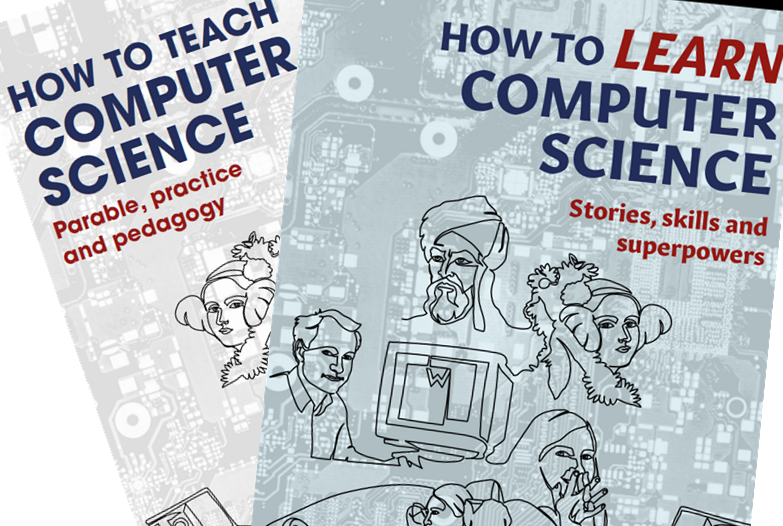


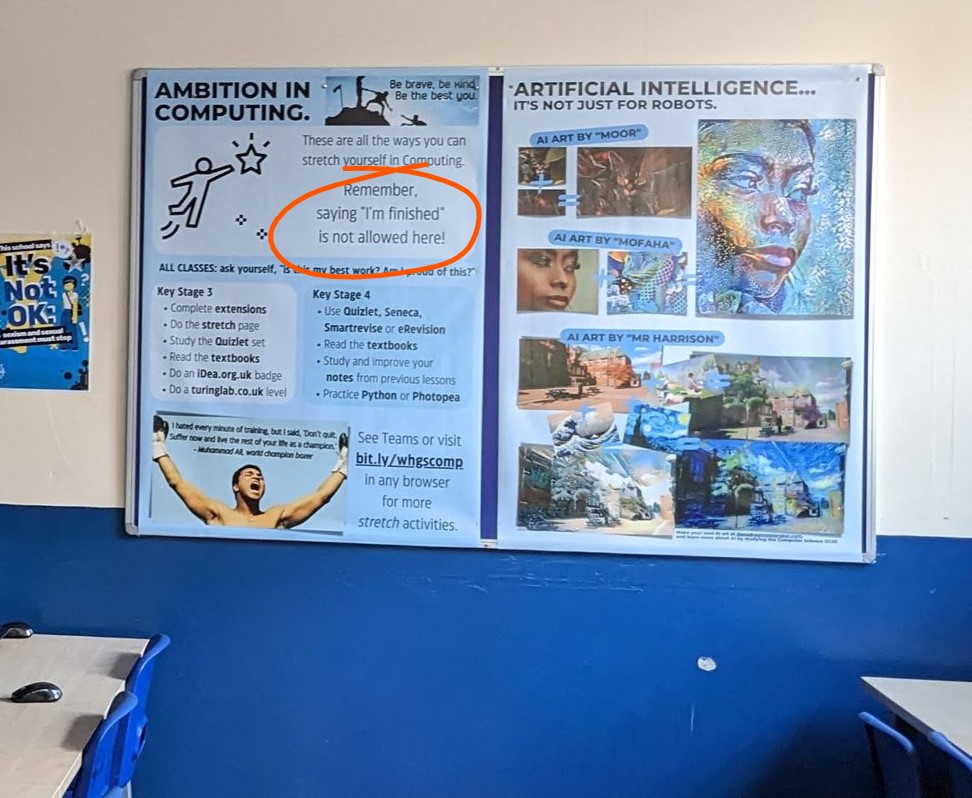

 )
)
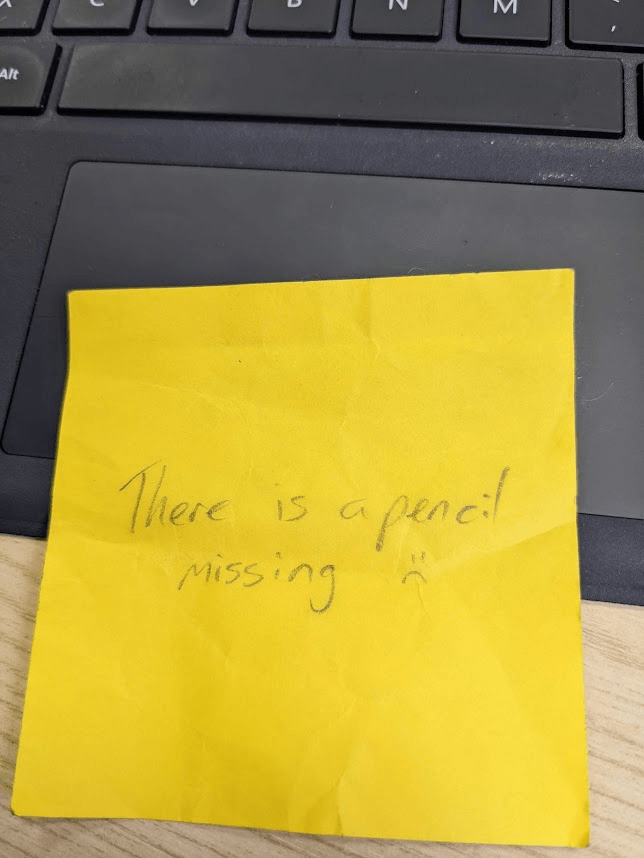

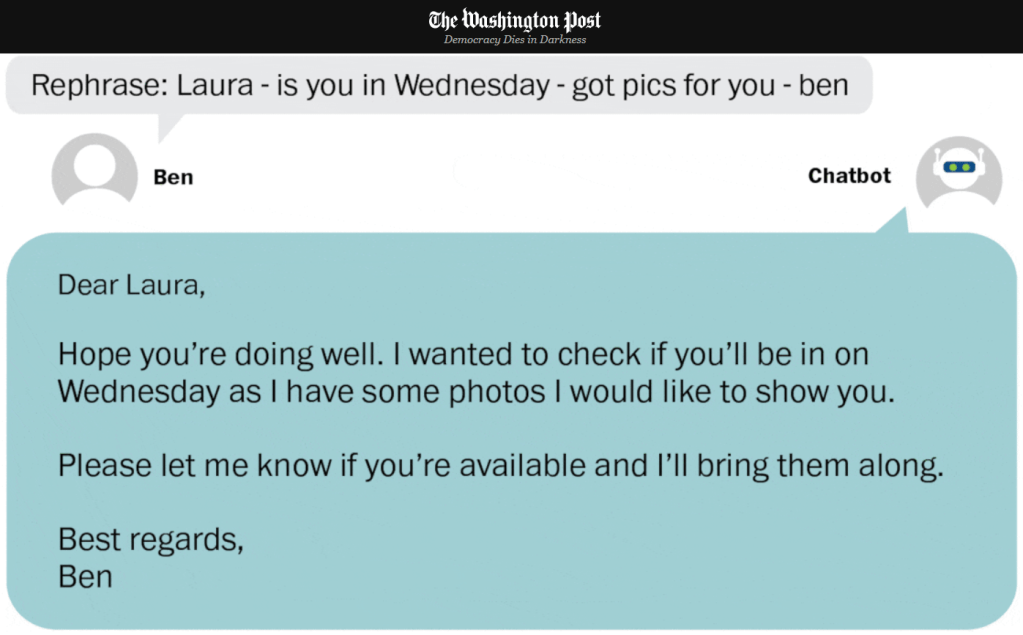



 How to Teach Computer Science
You must be logged in to post a comment.